
 Short
What in the Hog?!
Arizona Selected Spectator Mode | What the Hog
Publicado 26 oct 2026
THE MATCHUP LAB · NFL
Marcadores, estadísticas y la historia del partido.
Buscando actualizaciones…
COBERTURA DE THE MATCHUP LAB
Denver Broncos 30, Arizona Cardinals 16 in regulation
Complete NFL Week 7 recap and season assessment
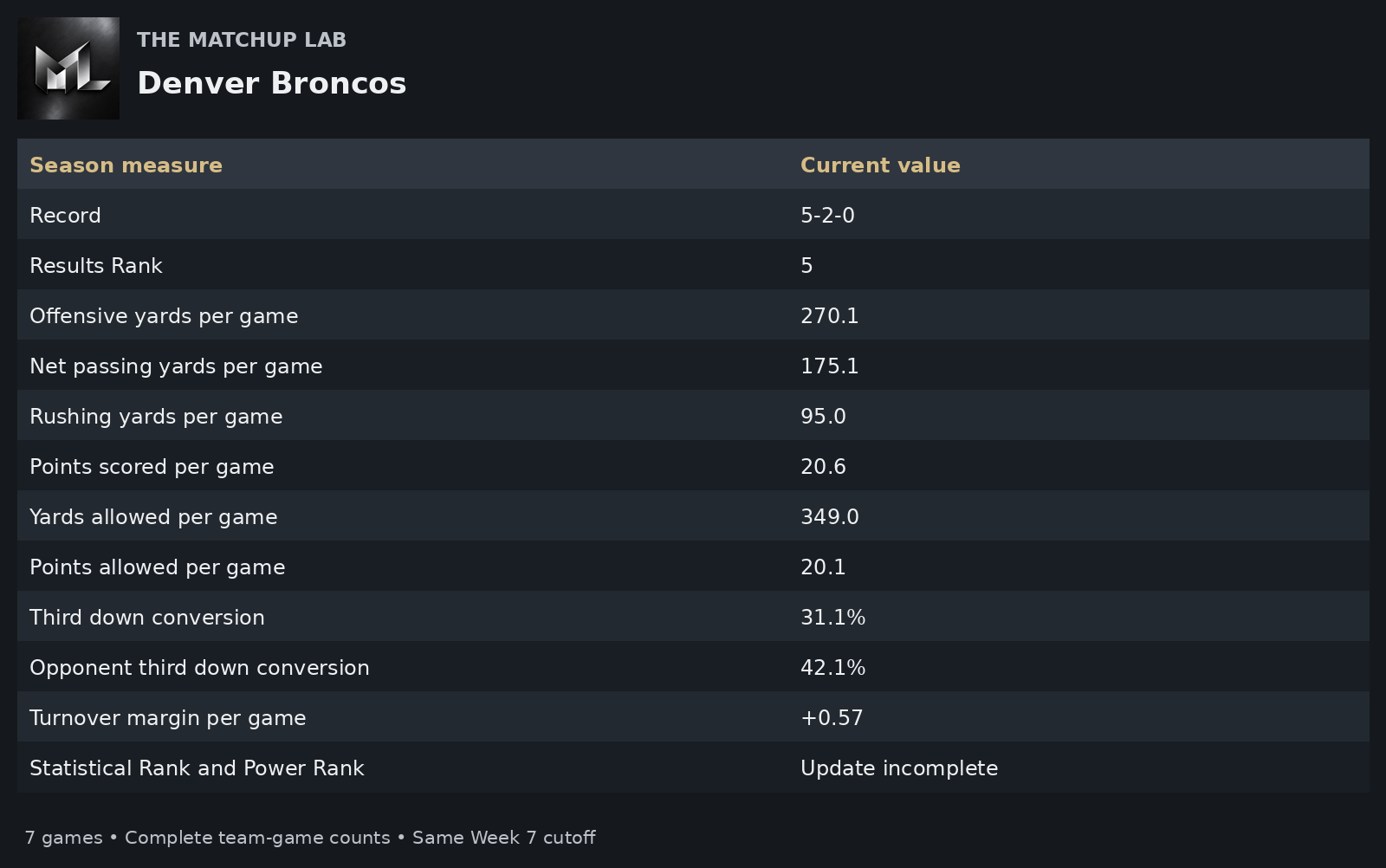
Denver's offense contributed much more directly to this win than a narrow season scoring margin might suggest. The Broncos gained 378 yards and ran for 160 without giving the ball away. Arizona also protected possession, so Denver had to earn its separation. Only three of eleven third downs became conversions, leaving a clear improvement even in a fourteen-point victory. Better early gains would reduce the need to rescue possessions late. Five wins deserve their place in the results assessment, while the season as a whole still asks for a more dependable scoring cushion.
Denver scores 20.6 points per game and allows 20.1, leaving a small scoring margin behind five wins. Its offense gains 270.1 yards per game. That limited season production makes a clean possession especially valuable and another empty series especially costly. The Arizona result offers evidence that the offense can provide more help, provided it does not turn one improved game into an assumed weekly return.
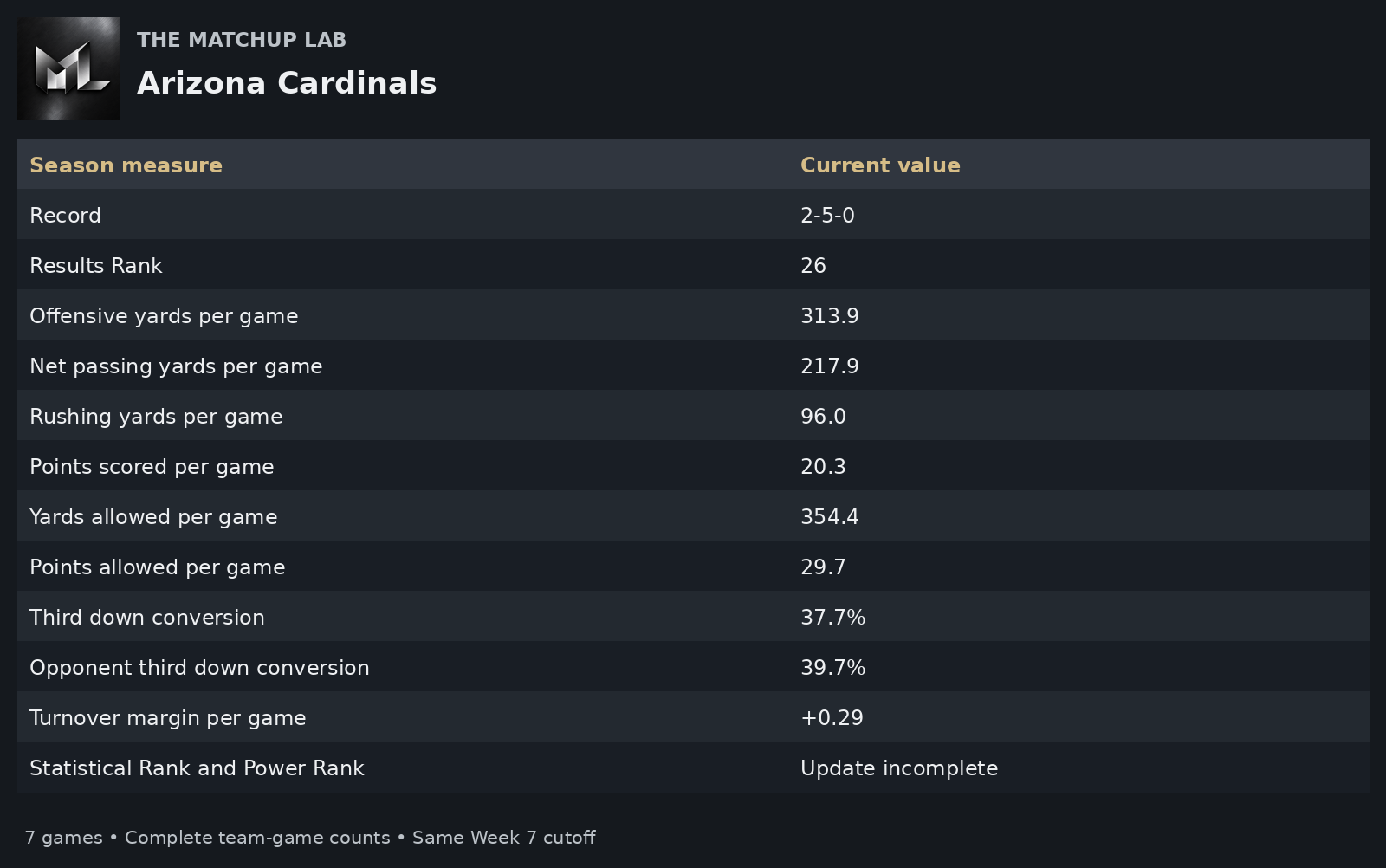
Arizona protected possession against Denver but still lost by fourteen. The Cardinals gained 353 yards and converted only five of seventeen third downs, leaving too many opportunities dependent on another rescue. Denver ran for 160 yards and also avoided giveaways. Arizona therefore needed more from its own sustained possessions rather than a turnover return to change the game. The season has allowed substantially more points than it has scored. Better early gains and a firmer response to the run would make the next scoring chance arrive with less ground and fewer obvious passing downs to negotiate.
Arizona allows 29.7 points per game and scores 20.3, leaving a substantial season burden on its offense. The Cardinals convert 37.7% of third downs. Better gains before that down would give the offense more choices and fewer obvious recovery situations. The defense must also end ordinary drives earlier so an improved possession is not immediately followed by another demand for points.
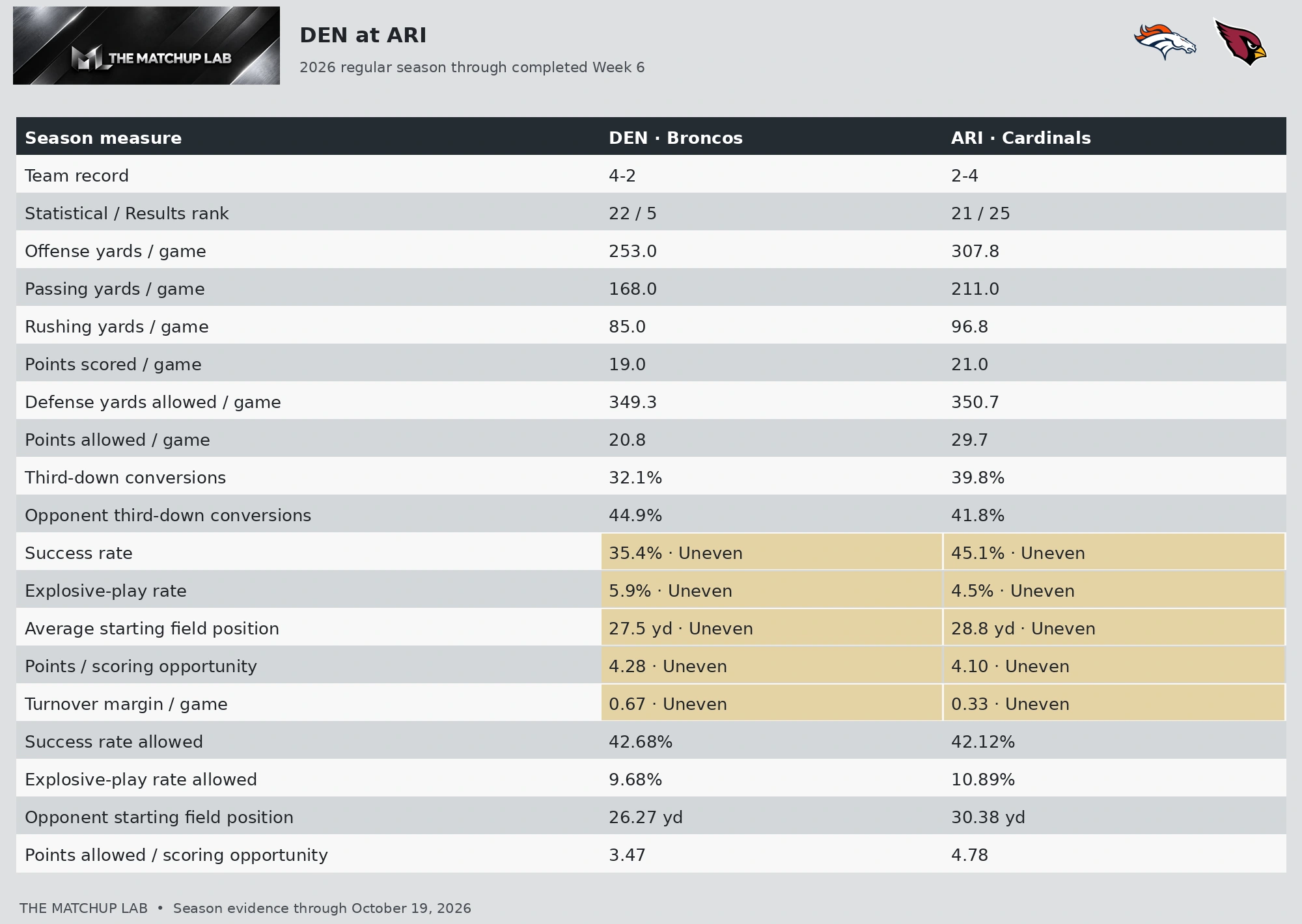
Denver has banked four wins while leaving its offense with a narrow operating margin. The Broncos have produced ordinary gains and long plays less frequently than opponents, yet have extracted a healthier return from selected scoring opportunities. Arizona presents an unusual test because the Cardinals have been more reliable at gaining ordinary ground while producing even fewer long gains. The two offenses therefore need different improvements. Denver must reach useful territory more often. Arizona must make a succession of manageable gains survive long enough to become points, without assuming that one large play will shorten the assignment.
The defensive comparisons offer each side a possible way to escape those constraints. Arizona has allowed long gains at a much higher rate than it has produced them, while Denver's defense has also conceded larger plays more frequently than its own offense creates them. Neither offense should mistake that vulnerability for a completed opportunity. It first needs the ball protected and a workable down. Both turnover margins are positive. That help can change quickly when two teams meet, so neither should build its plan around receiving another extra possession. The non-turnover starting-position numbers also give little support to expecting a large Denver territorial advantage.
The Broncos' overtime win over Seattle and the Cardinals' two-point win over the Rams both showed the value of keeping an opponent's score within reach. They did not remove the full-season offensive questions. Denver needs useful gains before its finishing advantage can matter. Arizona needs the defense to repeat its improved resistance without conceding the larger play that makes an ordinary stop irrelevant. The decisive exchange is Arizona's sustained offense against Denver's ability to prevent a dangerous possession from becoming a touchdown. The Cardinals can change the scoring burden by making their ordinary gains count. Denver needs more chances of its own, with enough ball security to preserve the limited possessions it has generally created.