
 Short
NFL
The Jets Supplied the Welcome Basket | Coach Roast
Published Oct 26, 2026
THE MATCHUP LAB · NFL
Scores, statistics and the story behind the game.
Checking for updates…
THE MATCHUP LAB COVERAGE
Miami Dolphins 28, New York Jets 25 in regulation
Complete NFL Week 7 recap and season assessment
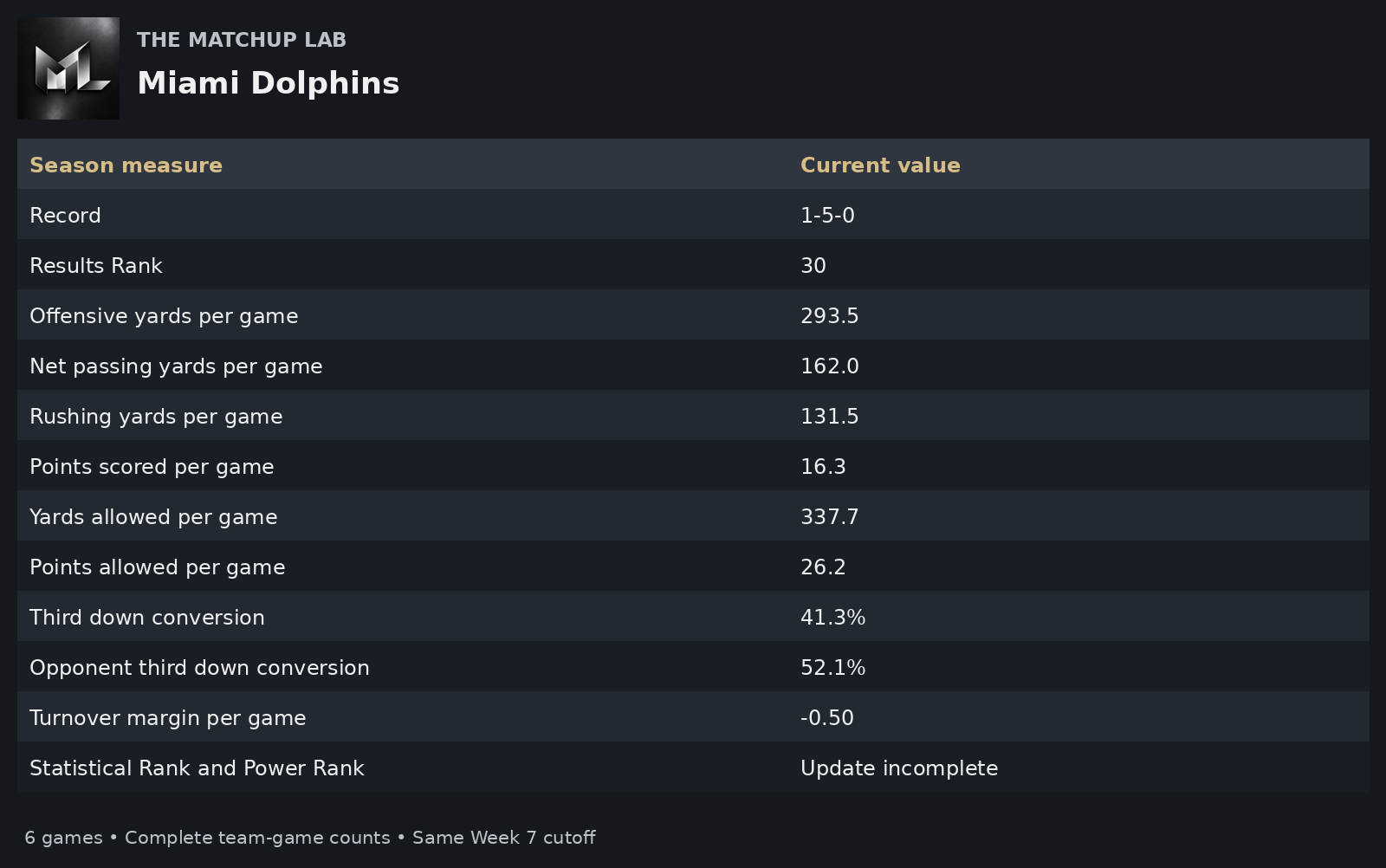
Miami's first win came with 156 rushing yards and no giveaways. Those contributions gave the offense a more useful foundation than a single long completion. The defense still allowed 377 yards and seven conversions on thirteen third downs, leaving the result close enough for another score to matter. The season remains five defeats and one win with a substantial scoring deficit. Miami should preserve the ground production and clean possessions while asking its defense to end more series earlier. A first victory changes the record immediately. Establishing a dependable way to earn the second takes more than repeating the final score.
Miami's offense averages 293.5 yards and 16.3 points per game, while the defense allows 26.2. Those season totals keep the first win in proportion. The Dolphins need cleaner possessions to remain useful without assuming that one improved rushing afternoon has repaired every offensive problem. The defense must contribute earlier stops so the next scoring drive establishes an advantage instead of merely keeping another game within reach.
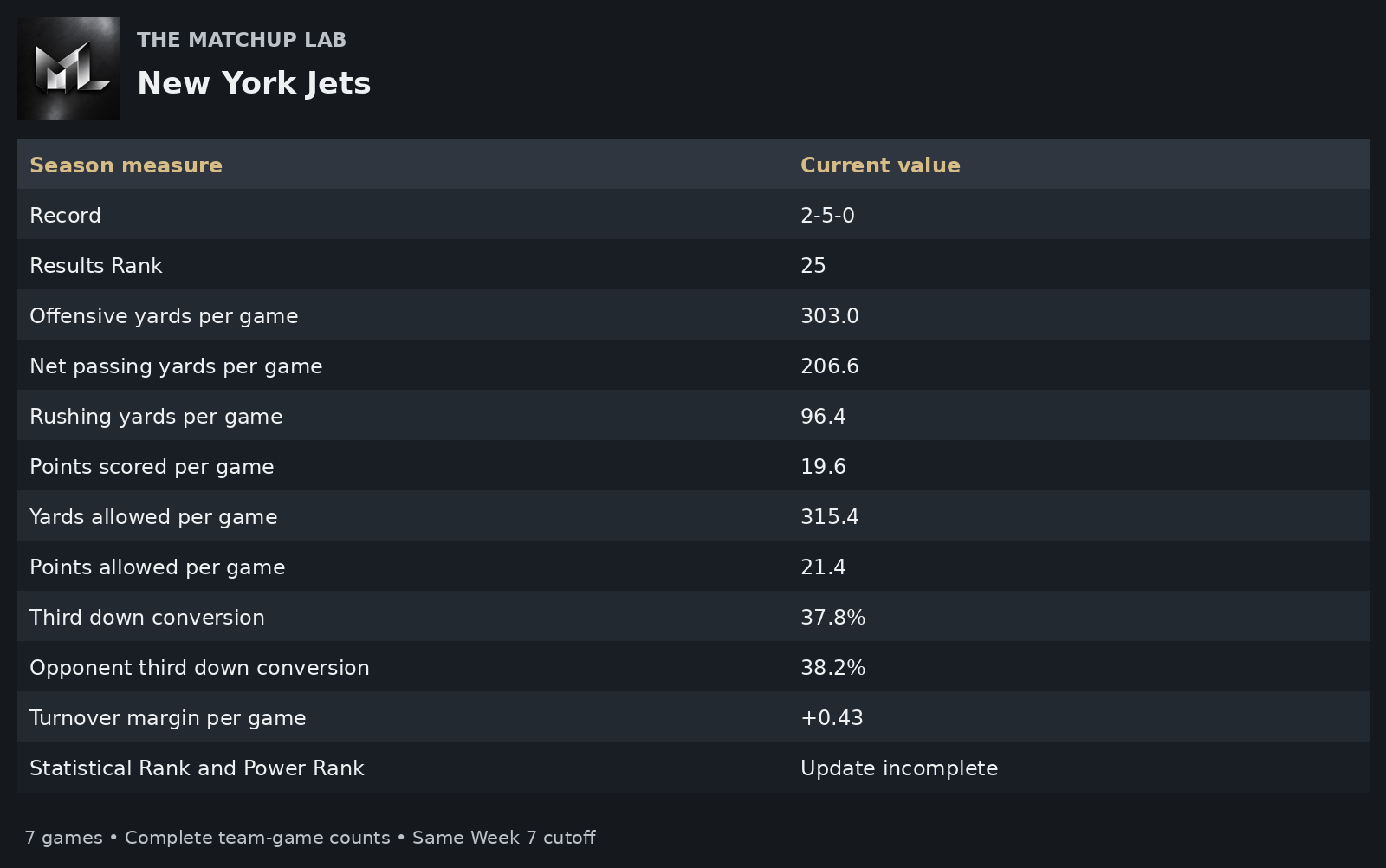
The Jets gained 377 yards and converted seven of thirteen third downs, yet still lost to a previously winless Miami team. New York's one giveaway was not matched by the Dolphins, which made its productive possessions less valuable. The defense allowed 156 rushing yards and could not make twenty-five points sufficient. Across the season, scoring has remained modest enough that an extra lost chance matters. The Jets need to preserve the offensive work that was useful here while ending more of the opponent's ordinary drives. A narrow defeat does not make either requirement optional.
The Jets score 19.6 points per game while conceding 21.4. That modest offensive return makes a lost possession expensive even when the yardage is respectable. Their season third-down conversion rate is 37.8%. Keeping a drive alive matters only if the possession eventually produces a useful score. New York needs cleaner endings to those drives and fewer occasions when its defense allows the next rushing gain to undo the work.
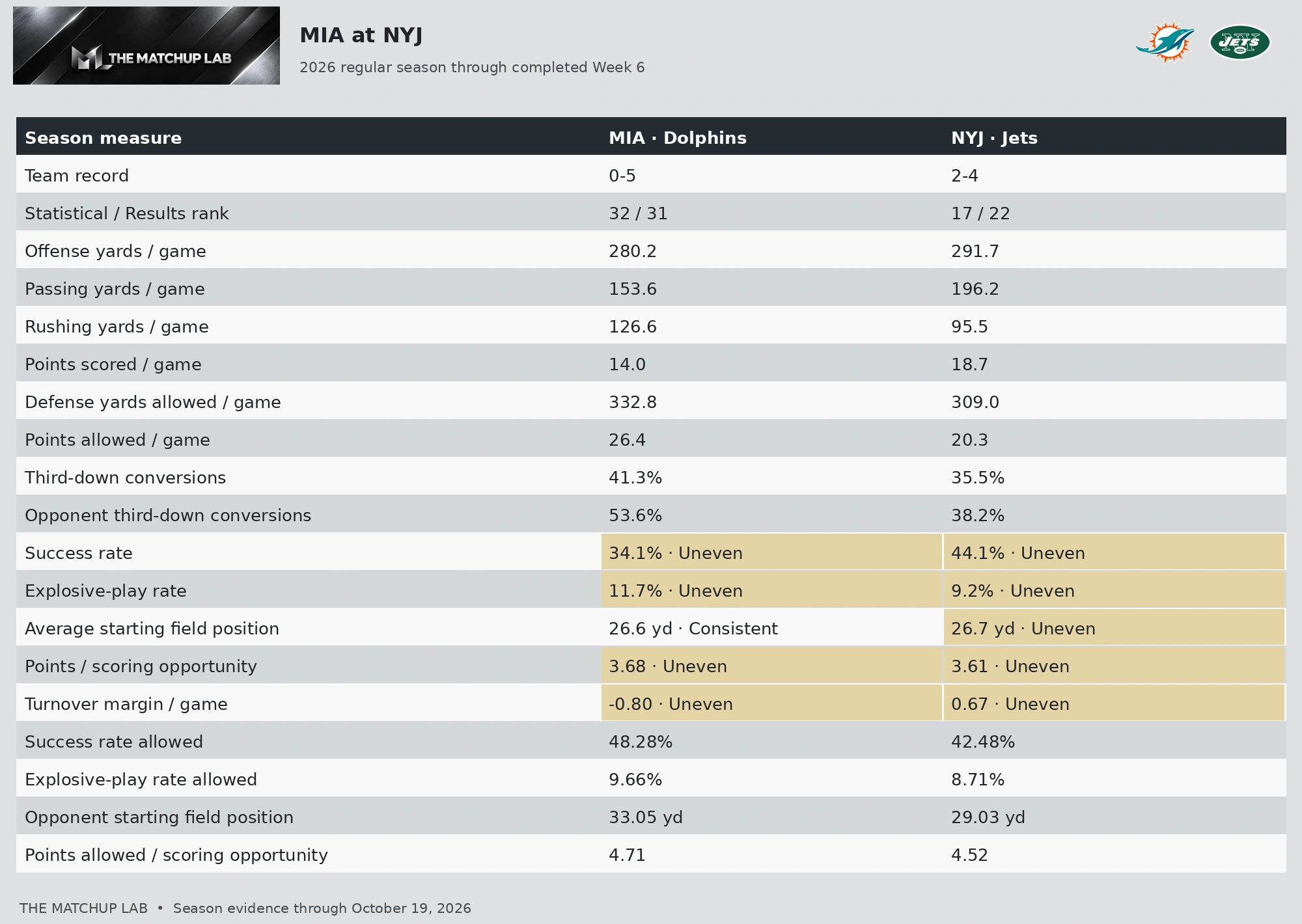
Miami has produced occasional long gains without establishing a dependable offense between them. That is the contradiction the Jets should test. The Dolphins have made successful ordinary plays much less frequently than opponents, while starting farther from scoring territory and losing more possessions than they have gained. One large completion can change a drive. It cannot reliably replace all the useful downs required across an afternoon. Miami needs first and second downs that leave more than one plausible way forward, rather than treating every stalled series as an invitation to attempt a rescue.
New York's defense has kept its scoring burden workable, allowing 20.3 points per game. The offense has averaged only 18.7. Its ordinary-play comparison is slightly favorable, but reaching useful positions has not consistently turned into enough points. Miami's defense has allowed successful plays on 48.3% of qualifying attempts and a high return from threatening possessions. The Jets should be able to ask for steady progress here, provided they do not turn an apparent opening into another wasted drive. Their positive turnover margin is assistance already recorded, not permission to assume the Dolphins will give them an extra chance on schedule.
Starting territory makes the practical requirements different. Miami has had to travel farther than its opponents, and New York has not enjoyed especially short non-turnover starts either. Neither offense should rely on a return or defensive mistake to begin in comfortable range. The Jets need useful gains to accumulate until the defense has to protect the end zone. Miami needs its larger plays to lead into productive sequences rather than isolated highlights between punts. The decisive exchange is the Dolphins' ability to avoid the repeated difficult down against New York's need to finish a possession it should be able to extend. The Jets can make their defensive work count by scoring earlier. Miami needs possession protection and a more stable sequence before the next long-gain attempt.