
 Short
What in the Hog?!
The Saints Shipped It to the Wrong Address | What the Hog
Published Oct 26, 2026
THE MATCHUP LAB · NFL
Scores, statistics and the story behind the game.
Checking for updates…
THE MATCHUP LAB COVERAGE
Pittsburgh Steelers 16, New Orleans Saints 10 in regulation
Complete NFL Week 7 recap and season assessment
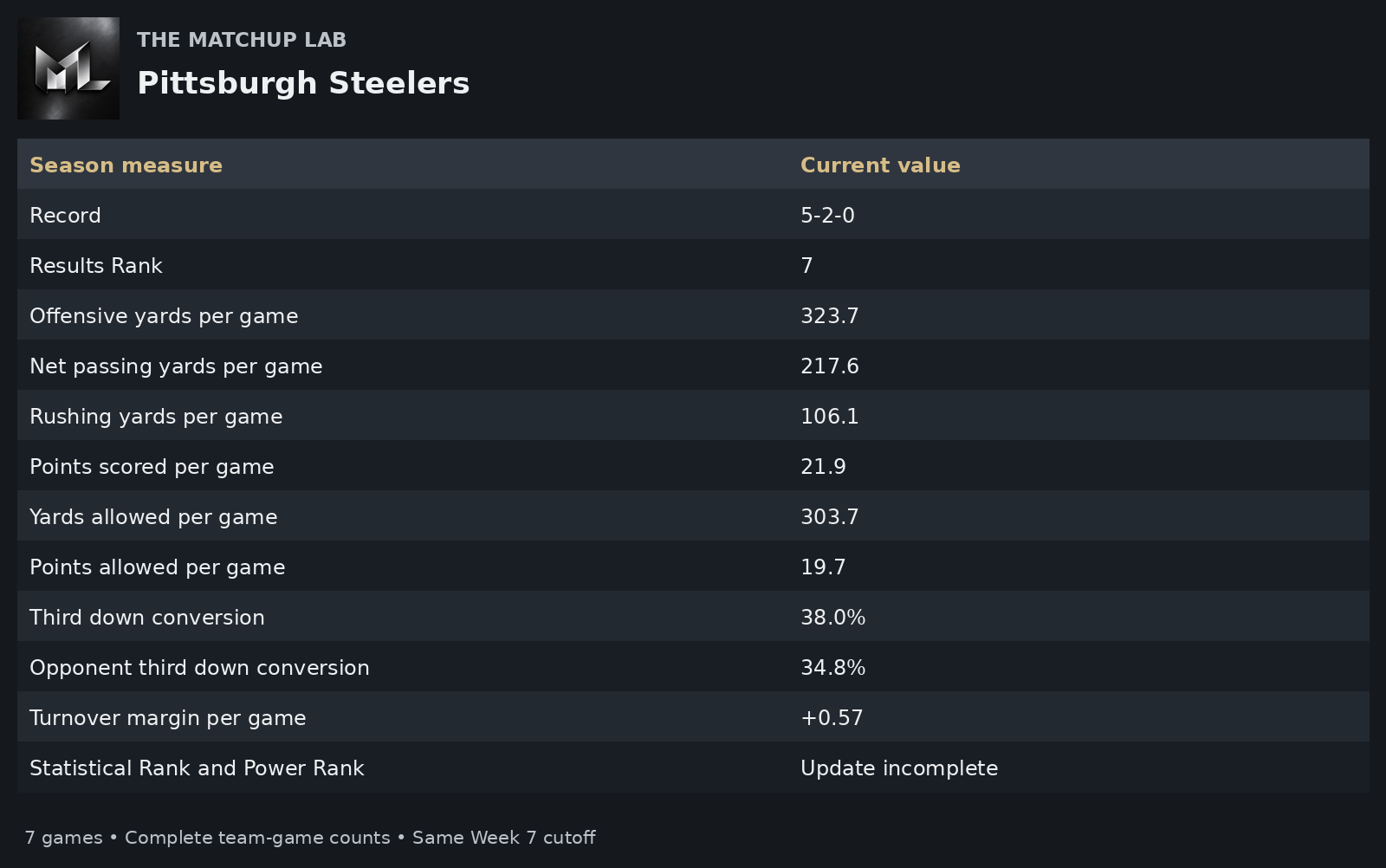
Pittsburgh sustained enough possessions to win in Saint-Denis without making the scoreboard look easy. Ten conversions on sixteen third downs and 148 rushing yards kept the offense involved. Sixteen points from 343 yards still leave room for a better return near the end of drives. The defense's restriction of New Orleans to eighteen rushing yards helped make that modest score sufficient. The Steelers should keep the useful ground work while reducing how often a third-down conversion is required to preserve it. Five wins are earned results, with finishing still an obvious route to a firmer margin.
Pittsburgh's 21.9 points per game exceed the 19.7 it allows, but the margin leaves little room for a wasteful possession. The season offense converts 38.0% of third downs. The Saints game showed how much additional work can be required when so many series reach that down. The Steelers need their useful rushing gains to shorten the next conversion and improve the points returned by an extended drive.
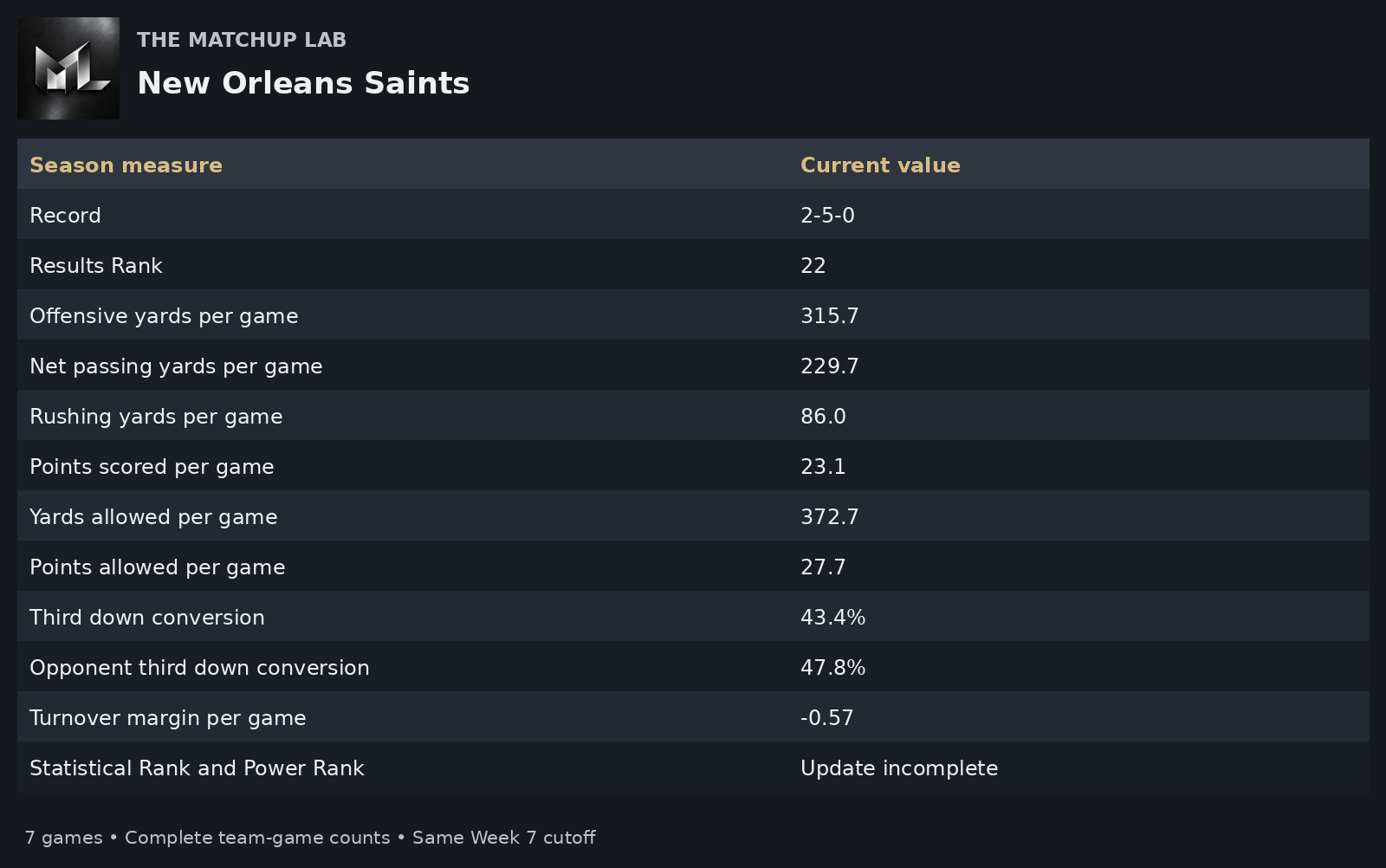
Eighteen rushing yards made New Orleans' offense depend heavily on passing progress against Pittsburgh. The Saints converted half their twelve third downs but produced only ten points. Their one giveaway removed another opportunity in a six-point defeat. The season has required the offense to cover for a defense allowing considerably more than twenty points per game. New Orleans needs useful rushing or short passing gains before the next difficult down, then a better return when the drive reaches scoring territory. Repeating one successful conversion does little if the following series ends with the same modest total.
New Orleans scores 23.1 points per game but allows 27.7. The offense averages 315.7 yards, leaving a difficult scoring burden when a possession stalls. The Saints need more useful early progress and a better finish to the chances that reach dangerous territory. Defensive stops must then hold long enough for that improvement to matter, rather than immediately placing the same demand back on the offense.
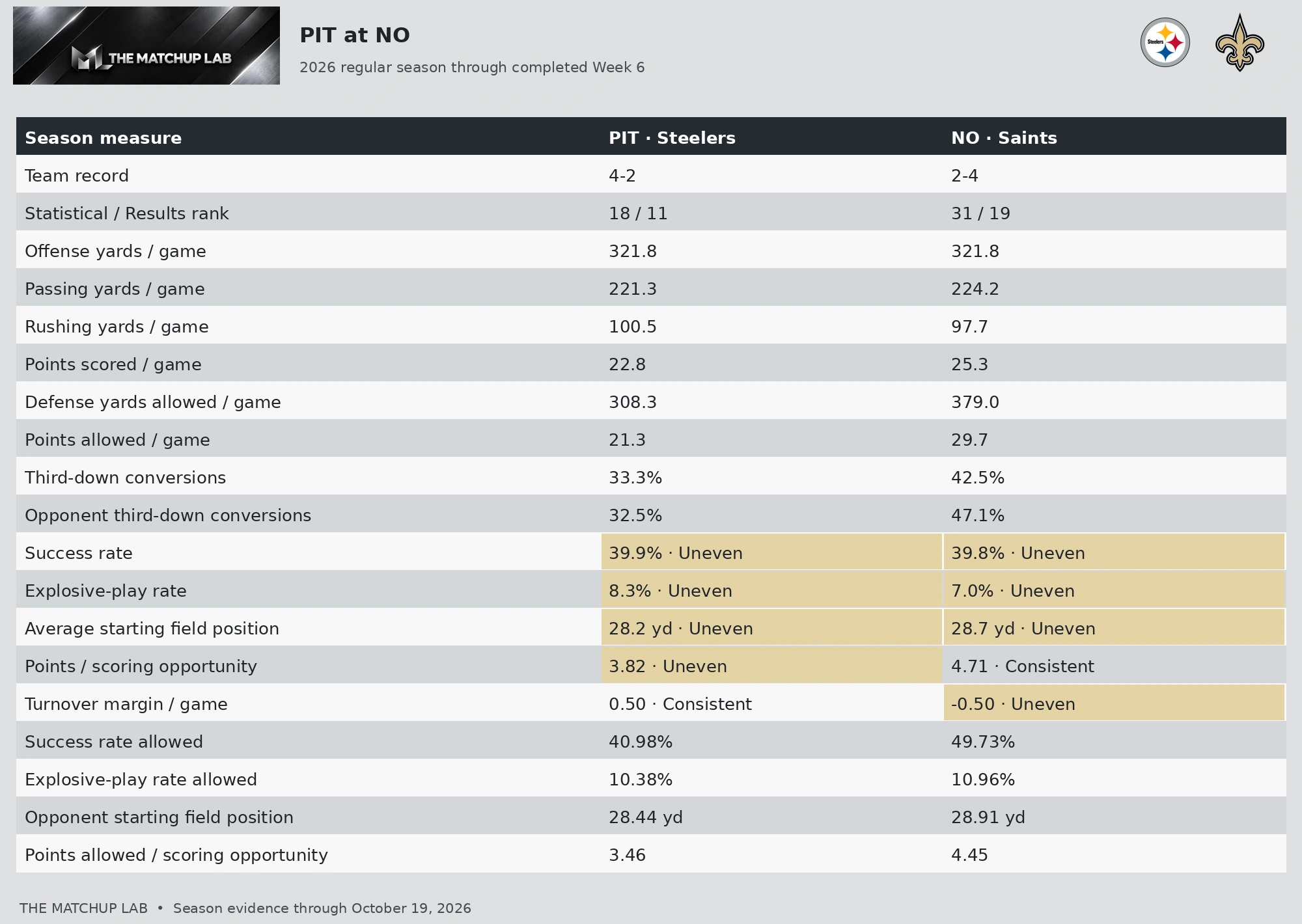
Paris gets a Pittsburgh team that has won more often than its underlying possession work might suggest and a New Orleans team whose scoring has struggled to cover for its defense. The Steelers' 4–2 record deserves credit. Their offense has still produced useful gains less frequently than opponents have, and their long-play comparison also runs the wrong way. The Saints present a clear opportunity to change that. New Orleans has allowed successful ordinary plays on nearly half of its opponents' attempts. Pittsburgh should be able to ask for steady progress before asking for a spectacular solution.
The temptation is to look at New Orleans' 34 points against the Giants and assume the offense can simply outscore another opponent. Across the season, the Saints have been efficient once they reach scoring territory, but reaching it repeatedly is a separate task. They have produced long gains less frequently than they have allowed them. Pittsburgh's defense has held opponents to a lower return from dangerous possessions, and its positive turnover margin has helped provide extra opportunities. Those takeaways are useful work already recorded. They are not an extra possession that can be booked into the Paris itinerary in advance.
Pittsburgh needs early-down gains that leave a realistic run or pass on the next snap. That would turn the Saints' difficulty getting off the field into a sustained burden, rather than letting one stop reset the game. New Orleans needs to force the Steelers to travel the full field and avoid the giveaways that have increased an already demanding scoring requirement. Starting positions are close enough that there is little reason to assume an automatic territorial advantage. The decisive exchange is Pittsburgh's ability to create possessions without turnover assistance against a defense that has conceded too much ordinary ground. The Saints can change that argument by making the next tackle end the drive, then finishing their own chances.