
 Short
What in the Hog?!
What the Hog | Gravity would like a word
Publicado 24 oct 2026
THE MATCHUP LAB · NFL
Marcadores, estadísticas y la historia del partido.
Buscando actualizaciones…
COBERTURA DE THE MATCHUP LAB
ShortWhat in the Hog?!
Publicado 24 oct 2026
 Short
NFL
Publicado 23 oct 2026
 Short
NFL
Publicado 23 oct 2026
 Short
NFL
Publicado 23 oct 2026
New England Patriots 24, Chicago Bears 30 in regulation
Complete NFL Week 7 recap and season assessment
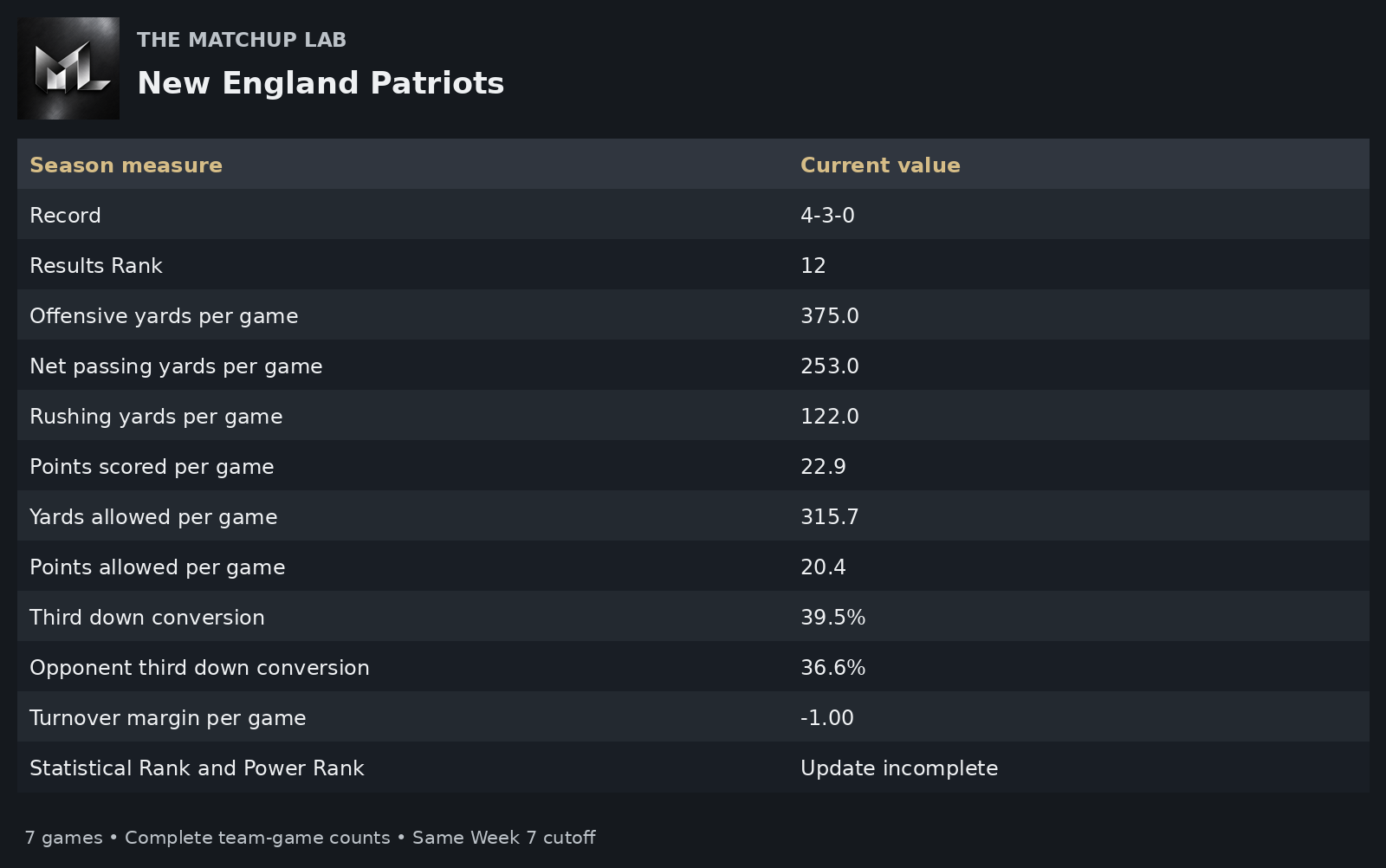
New England gained 380 yards in Chicago and still needed more from its possessions. Two third-down conversions in seven attempts limited the ability to repair a stalled series. The Patriots' one giveaway also cost a chance that Chicago did not return. Their season scoring margin remains positive, but a third defeat makes the difference between productive yardage and controlled possessions more pressing. New England needs early gains that make the next down realistic and a cleaner finish to the drives that survive. The defense cannot expect 380 yards allowed to be harmless merely because the offense can answer.
The Patriots' 375.0 offensive yards per game have produced 22.9 points, while the defense allows 20.4. The season scoring balance remains positive despite a third loss. Possessions lost through mistakes or failed conversions make that broader yardage advantage harder to use. New England needs the ground it earns to survive until a scoring attempt, with the defense preserving the next lead rather than asking the offense to rebuild it.
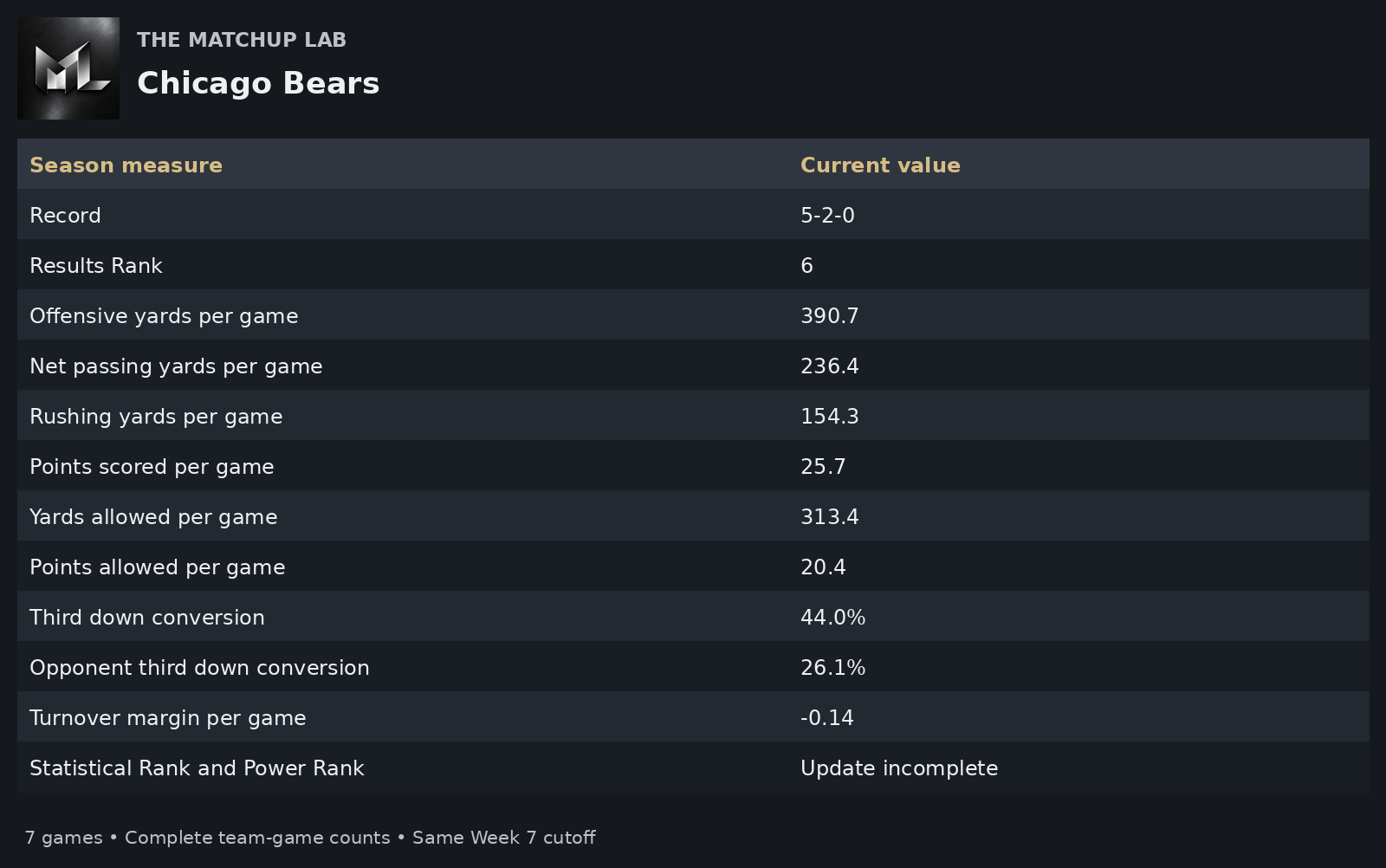
Chicago reached five wins with 405 yards and no giveaways against New England. That clean possession record made thirty points more useful than another impressive offensive total accompanied by a donation. The Bears still converted only four of twelve third downs and allowed 380 yards. There is work to do before the next close finish can be considered comfortable. Their offense needs enough early progress to avoid repeatedly leaning on the next difficult conversion. The defense must make promising stops survive the following play instead of asking the offense to rebuild the lead.
The Bears' season offense averages 390.7 yards and 25.7 points, while the defense allows 20.4 points. That is a useful scoring cushion across seven games. Opponents still convert 26.1% of third downs, so keeping a drive alive is not solely an offensive question. More stops before scoring territory would let Chicago's productive offense build a margin that lasts through the following possession.
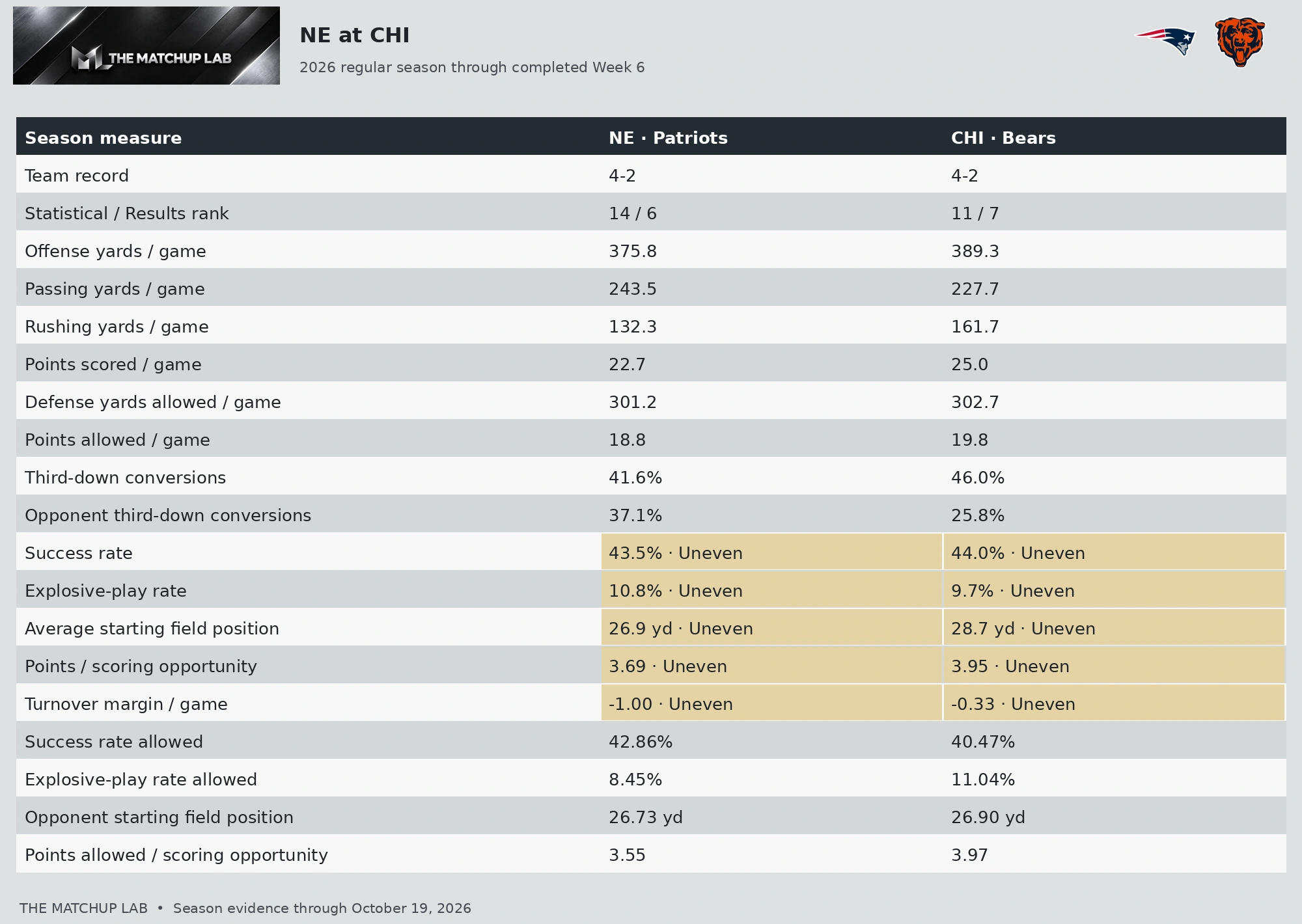
Two 4–2 records arrive in Chicago by different routes. The Bears have been better at preventing routine offensive gains, while New England has kept a more favorable balance between long plays produced and conceded. That creates the game's main tension. Chicago can win several ordinary downs and still give back their value with one loose coverage or missed tackle. New England needs those gains to support a drive, rather than rescue a succession of difficult third downs. A productive first down changes which parts of the field the defense must protect on second down.
Chicago's offensive starting position has been better than the Patriots', but neither team has protected possession well enough to treat that assistance as dependable. New England has given away one more possession per game than it has taken back. The Bears' smaller deficit still matters in a matchup where a single extra chance could decide the result. A defensive stop, a punt return and an interception can all shorten the next possession, but they are different sources of help. The field-position comparison removes turnover-created starts so those mistakes are not counted twice. Neither offense should plan its afternoon around being handed the ball near scoring territory.
The Bears have averaged 25 points and the Patriots 22.7, yet their returns after reaching dangerous territory are fairly close. Sustaining progress is therefore more useful than waiting for one elaborate scoring play. Chicago should make New England convert a full series of downs, keeping the ball in front of its secondary after an early stop. The Patriots need to hold onto possessions and challenge the Bears' vulnerability to long gains without letting that search turn into stalled drives. The decisive test is whether Chicago's ordinary defensive advantage survives the next big-play opportunity. New England can make the record travel by removing the mistakes that have forced it to win possessions back.