
THE MATCHUP LAB · NFL
Game Center
Scores, statistics and the story behind the game.
Checking for updates…
Complete NFL Week 8 recap and all 32 team assessments
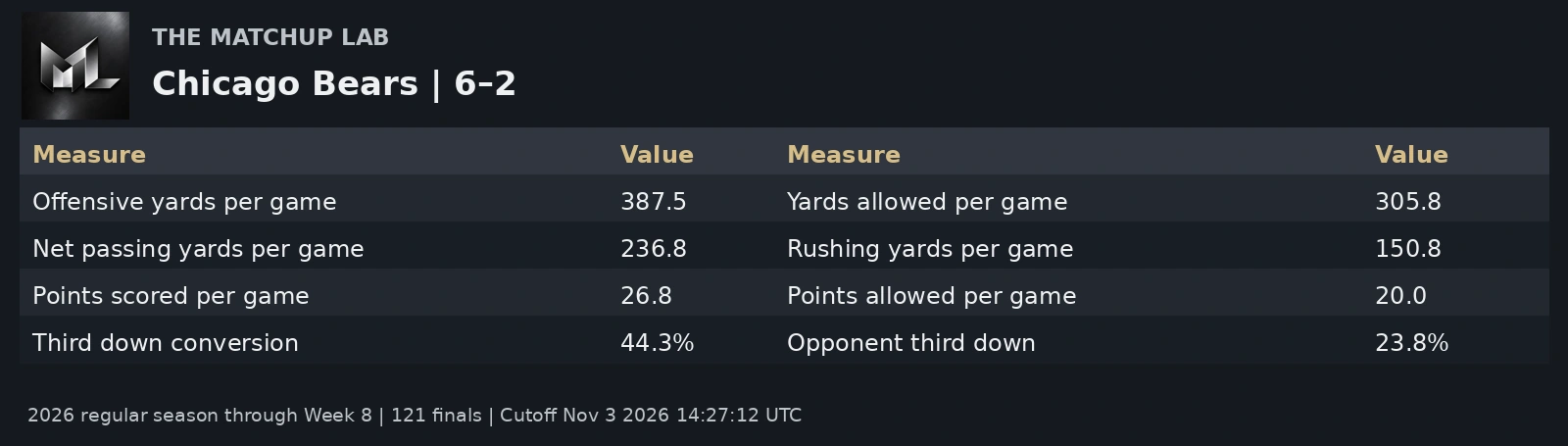
Chicago’s 34–17 win at Seattle completed Week 8 with a strong statement from a 6–2 team. The Bears gain 387.5 yards a game, including 150.8 rushing, and convert 44.3% of third downs. The defense allows only 23.8%, giving Chicago a striking advantage in continuing and ending series. Opponents still score 20.0 points a game against 26.8 for the Bears, so there is room to make that possession edge count more consistently. This was a convincing win with broader season support behind it.
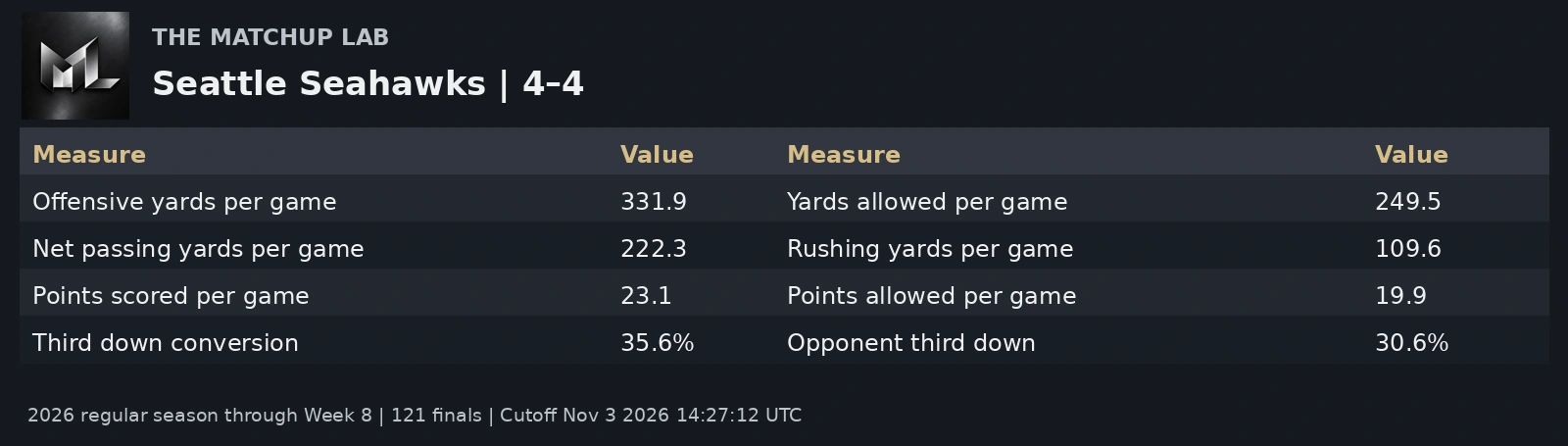
Seattle lost 34–17 to Chicago, a costly result for a defense that has otherwise allowed only 249.5 yards a game. Opponents convert 30.6% of third downs, and the Seahawks still own a 26-point season scoring advantage at 4–4. Their offense averages 331.9 yards but converts only 35.6% of third downs. The defensive foundation is meaningful; Seattle needs more offensive continuity to use it. One poor night should not erase the season’s stops, but those stops cannot be expected to compensate for every stalled possession.
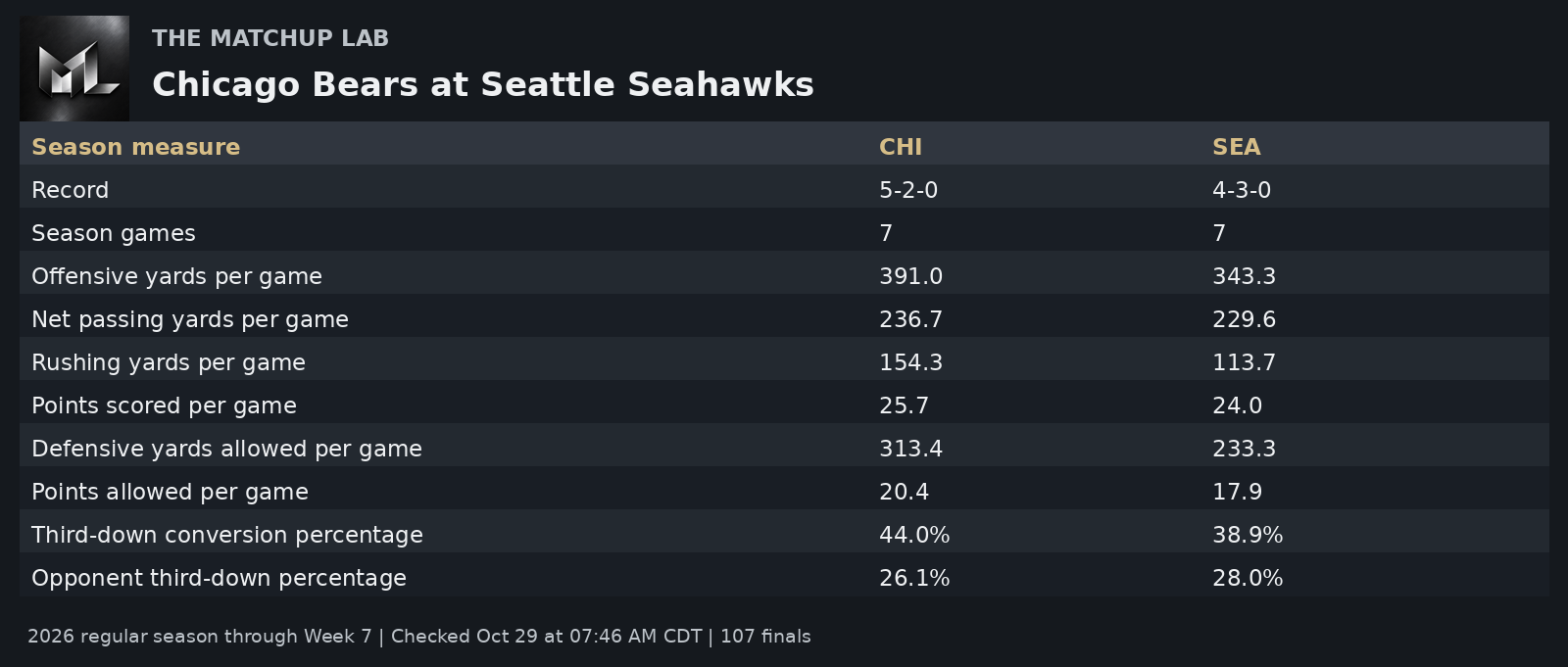
Chicago brings a productive offense to a defense that has allowed very little ground. Seattle's yardage allowance is the strongest in this matchup, while the Bears' rushing output and third-down offense give them several ways to test it. This is not simply a comparison of records. Chicago needs to show that its sustained-drive production survives when the first useful gain is harder to find and the next conversion is less comfortable.
The Bears' defense supplies its own demanding assignment. Opponents have converted a low share of third downs against Chicago, which puts pressure on Seattle to make its early snaps productive. The Seahawks cannot assume that one strong defensive series will be followed by an easy offensive answer. They need to turn their own yardage into points often enough that the defense is not required to repeat its best work indefinitely.
Seattle's recent defensive success is valuable evidence, but it should not become a promise that every opponent will be handled in the same way. Chicago has produced more rushing yardage and more total offense across the season than Seattle's latest opponent managed in that particular game. The Bears must make that production travel without exposing the defense through careless possessions. Seattle needs to interrupt Chicago's early-down rhythm and then capitalize on the possessions those stops create. The decisive question is whether Chicago can sustain its offensive standard against Seattle's prevention, while the Seahawks solve a Bears defense that has been particularly effective at ending drives on third down.
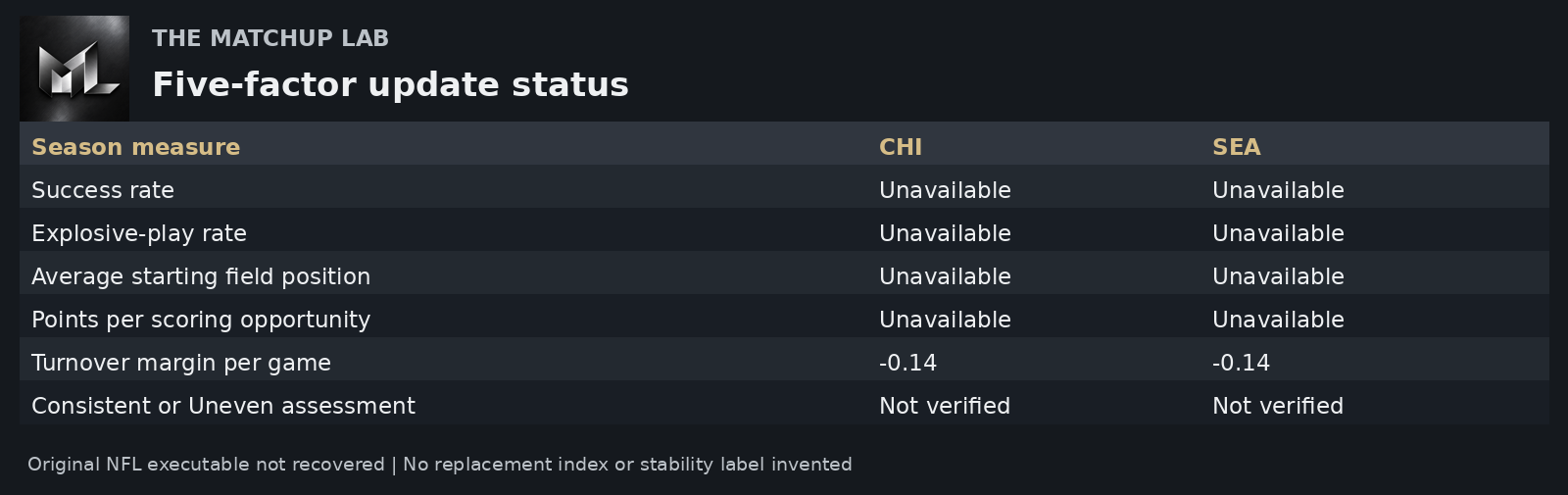
Chicago Bears won 30-24 against New England Patriots in its latest completed game, in Week 7. Seattle Seahawks won 20-3 against Kansas City Chiefs in its latest completed game, in Week 7. Those results are evidence of where the teams arrive, not a forecast. The season measurements above cover every completed regular-season game through the evidence cutoff; they are not single-game rates.