
THE MATCHUP LAB · NFL
Game Center
Scores, statistics and the story behind the game.
Checking for updates…
Los Angeles Rams 35, Las Vegas Raiders 21 in regulation
Complete NFL Week 7 recap and season assessment
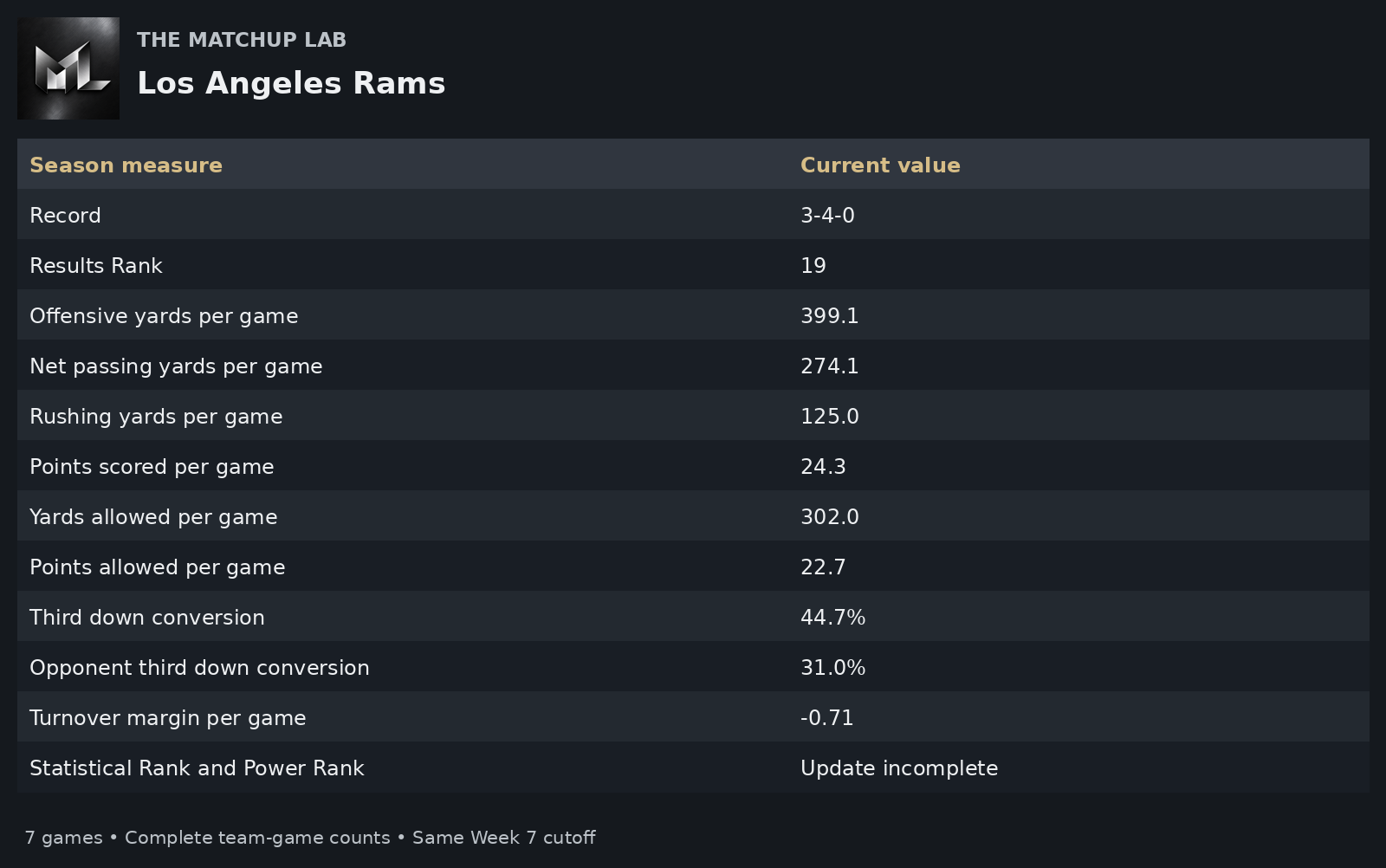
The Rams ran for 199 yards and converted five of ten third downs in Las Vegas. That gave their thirty-five points a substantial offensive foundation even after two giveaways. Winning despite losing the turnover exchange by two is useful evidence that the offense did more than cash in defensive gifts. It is still an unnecessarily expensive way to operate. The Rams' season remains below .500 despite a positive scoring margin. Cleaner possessions would let their productive drives establish control earlier and reduce how much useful work must be repeated just to repair a mistake.
The Rams average 399.1 offensive yards against 302.0 allowed. That favorable season distance comparison still sits beside a 3-4 record. Their 24.3 points per game have not consistently converted the yardage into enough wins. The Las Vegas result is useful because productive rushing and third-down work survived a poor turnover exchange. Removing those giveaways would let the same work create a less expensive route to control.
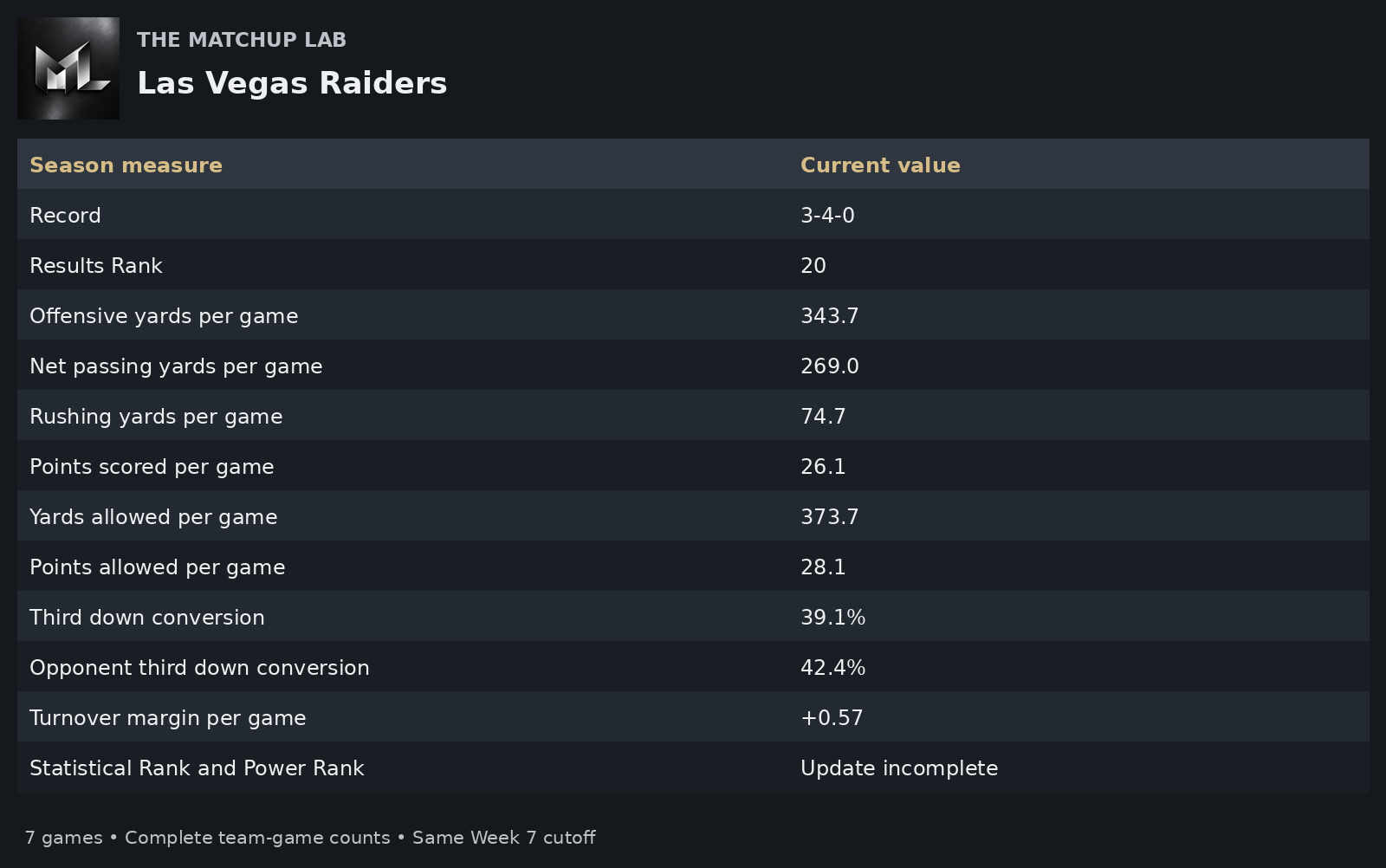
Las Vegas took the ball away twice and did not give it back through a turnover, yet lost by fourteen. Forty-eight rushing yards and three conversions in fourteen third-down attempts explain why the extra opportunities were not enough. The defense conceded 199 rushing yards, allowing the Rams to sustain work without needing a favorable turnover exchange. The Raiders' season has allowed more points than it has produced. They need ordinary offensive gains that let a possession continue and defensive tackles that end a series. Another takeaway would help, but it would not repair either requirement automatically.
The Raiders score 26.1 points per game and concede 28.1. Their offense converts 39.1% of third downs, while opponents convert 42.4%. Those season rates make sustained possession a problem on both sides of the ball. Winning a turnover exchange can provide extra chances, but ordinary defensive stops and an offense that keeps the next series alive are more useful than assuming another favorable mistake.
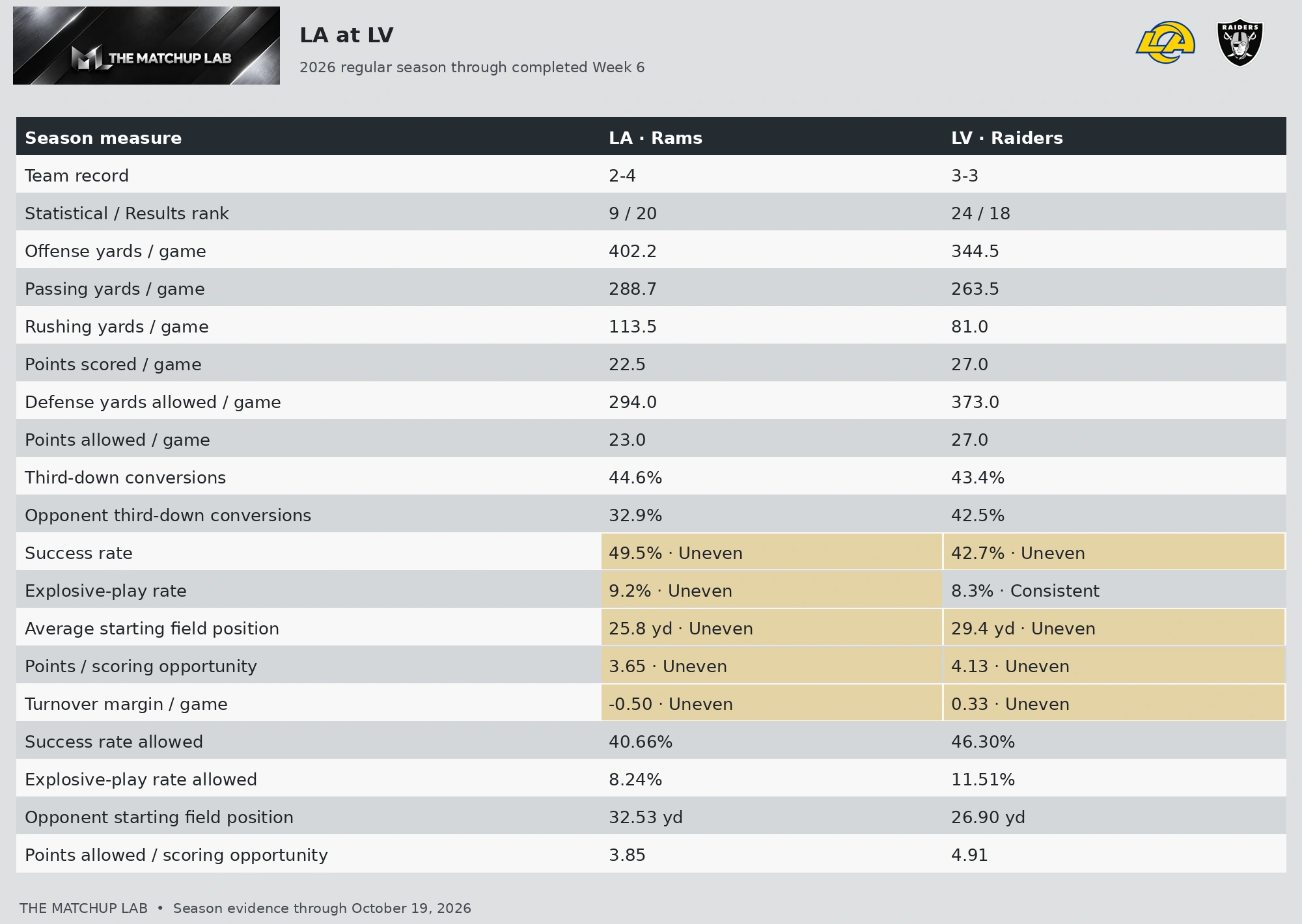
The Rams have a stronger ordinary-play comparison than their 2–4 record suggests. They have moved the ball more reliably than opponents, yet the latest two-point loss to Arizona again showed that useful gains do not automatically become enough points. Las Vegas offers an opening because its defense has conceded ordinary progress and long gains more frequently than its offense has produced them. Los Angeles should be able to ask for steady possessions here. The requirement is to make the last part of the drive as useful as the first, rather than presenting another statistical argument after a narrow defeat.
Starting territory has made that task harder for the Rams. Their non-turnover starts have been much less favorable than those given to opponents. A negative turnover margin adds a separate cost by removing opportunities altogether. Las Vegas has enjoyed better starting positions and a positive possession balance, helping its offense cover for defensive concessions. Those advantages explain how an even record can coexist with a less comfortable season comparison. They also identify what Los Angeles must change. The Rams need possessions that remain alive, while forcing the Raiders to earn distance without an interception or special-teams mistake providing a shortcut.
Las Vegas has scored and allowed exactly 27 points per game. Its 33–30 loss to Buffalo fit that narrow margin, with another productive offensive result unable to erase every defensive concession. The Raiders need early stops that make Los Angeles face a difficult down before reaching scoring territory. The Rams need to resist turning a favorable matchup into a search for an unnecessary play. Their long-gain balance is already healthier than the Raiders', so repeated useful execution is a reasonable starting point. The decisive exchange is the Rams' drive-building ability against Las Vegas' chance to force the mistake that changes the field. Los Angeles needs to finish without donating the next possession. The Raiders need defensive stops that their offense does not immediately have to replace.