
THE MATCHUP LAB · NFL
Game Center
Scores, statistics and the story behind the game.
Checking for updates…
Sun Nov 22 · Noon Central | Power 32 / 2 | Statistical 32 / 7
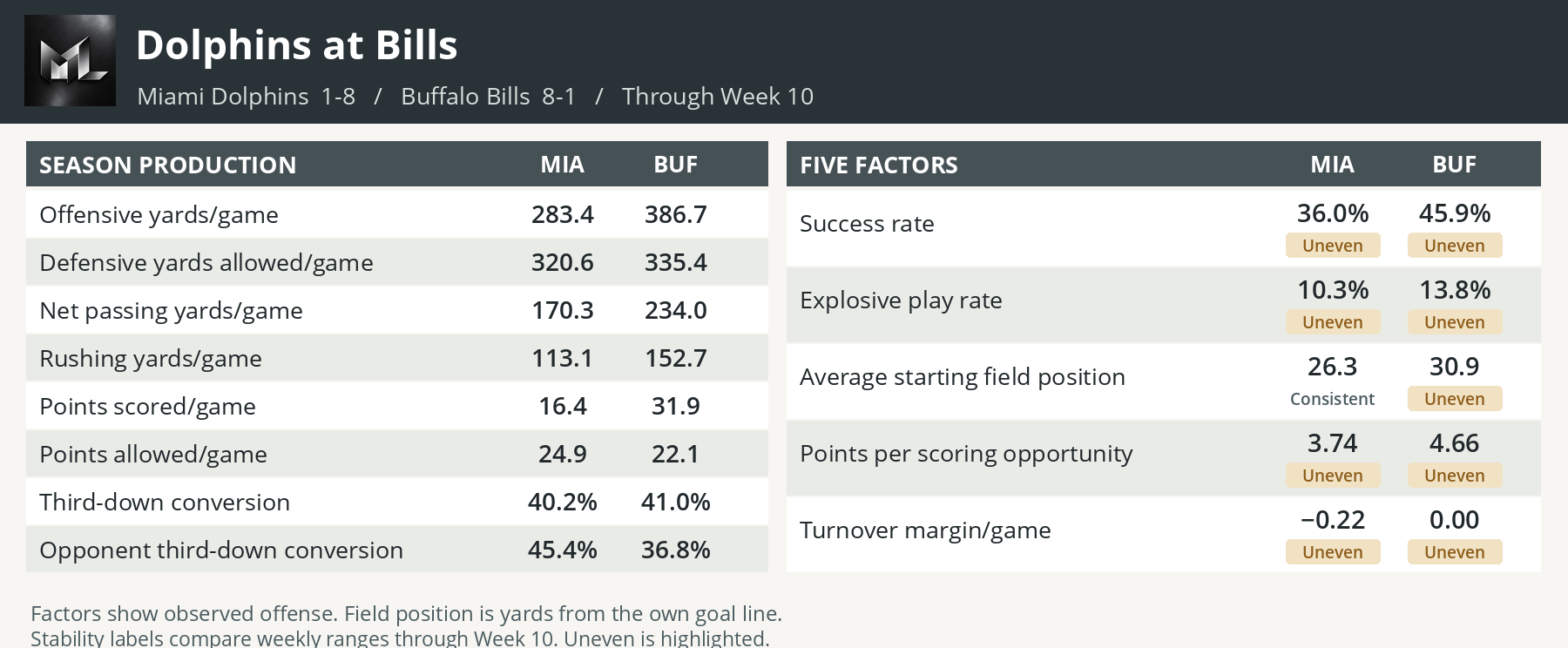
Buffalo just beat the Jets 31–12 with 389 yards on 54 offensive plays. James Cook III supplied 157 rushing yards, including a 74-yard touchdown, and the performance fits the Bills’ season identity. Their 13.8 percent explosive rate gives them an answer when a possession stalls before third down. Miami has to contain that threat while repairing a much more basic imbalance. The Dolphins have succeeded on 36.0 percent of their own plays and allowed opponents to succeed on 46.7 percent. That makes the largest spread on this board, Buffalo by 16.5, understandable without making a three-score margin automatic.
Miami’s more promising comparison comes after reaching scoring territory. Its offense averages 3.74 points per opportunity, while Buffalo has allowed 3.98. A Dolphins possession that reaches the opponent’s 40 therefore has a plausible way to become points. Getting there is the harder assignment. Miami’s early-down success rate is only 34.2 percent, leaving its 40.2 percent third-down conversion rate to do too much rescue work. Against Buffalo’s 36.8 percent third-down defense, a series built around repeated long-yardage conversions is a fragile plan.
The Bills also start eligible drives at their own 30.9 on average, compared with Miami’s 26.3. That difference accumulates across a game, especially when Buffalo already scores 31.9 points per outing. Miami can reduce the number of scoring chances by tackling the first explosive threat and making the Bills use several more snaps. Buffalo’s defense has allowed a 44.4 percent success rate, so the Dolphins do have space to assemble an ordinary drive if they keep the ball and stay ahead of the sticks. Their 24–22 loss at Indianapolis shows why one productive stretch can still leave the result close.
Buffalo’s 8–1 record and first-place Results Rank give the favorite a strong résumé as well as a productive offense. The practical test is whether it can impose its explosive advantage before Miami’s offense settles into sustained possessions. A 45.5 total asks the Dolphins to contribute something or the Bills to do most of the scoring themselves. For Miami, the first useful measure is simple. Can it arrive at halftime with its offense still choosing the next play, rather than chasing the scoreboard?
Complete NFL Week 10 recap and all 32 team assessments
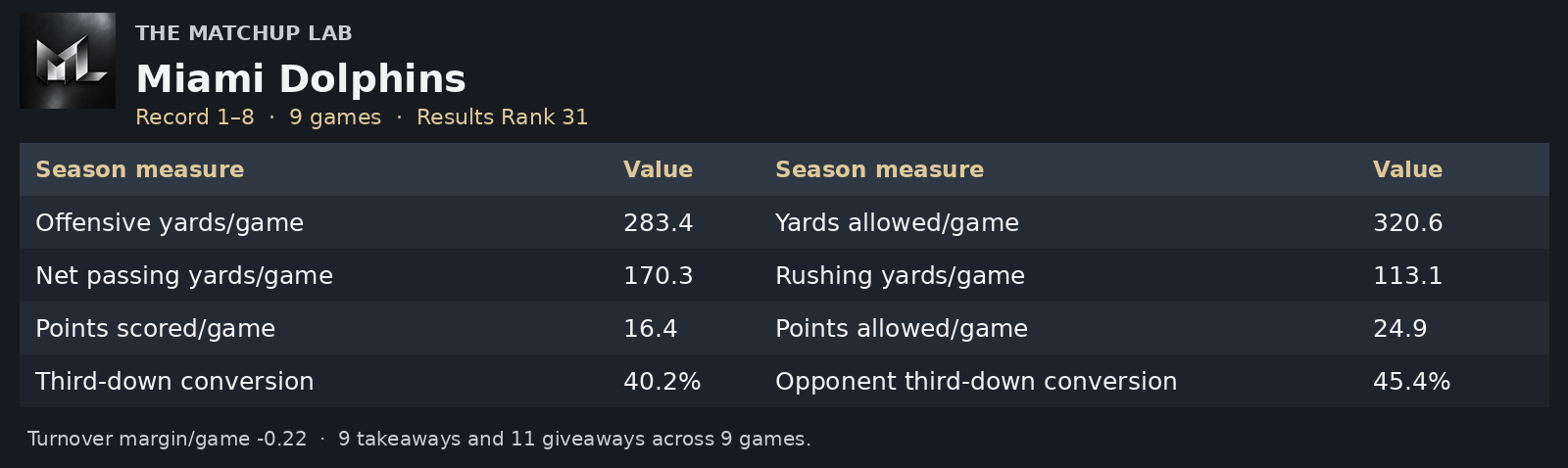
Miami came within a two-point conversion of tying Indianapolis despite getting only 78 rushing yards. A defensive touchdown and a touchdown pass from receiver Malik Washington gave the Colts different problems from the ones posed by the base offense. At 16.4 points per game that offense needs a more frequent source of touchdowns. Buffalo can score from a yard away or from the other side of midfield, a difficult opponent to match if Miami needs a return or a trick play to reach the end zone.
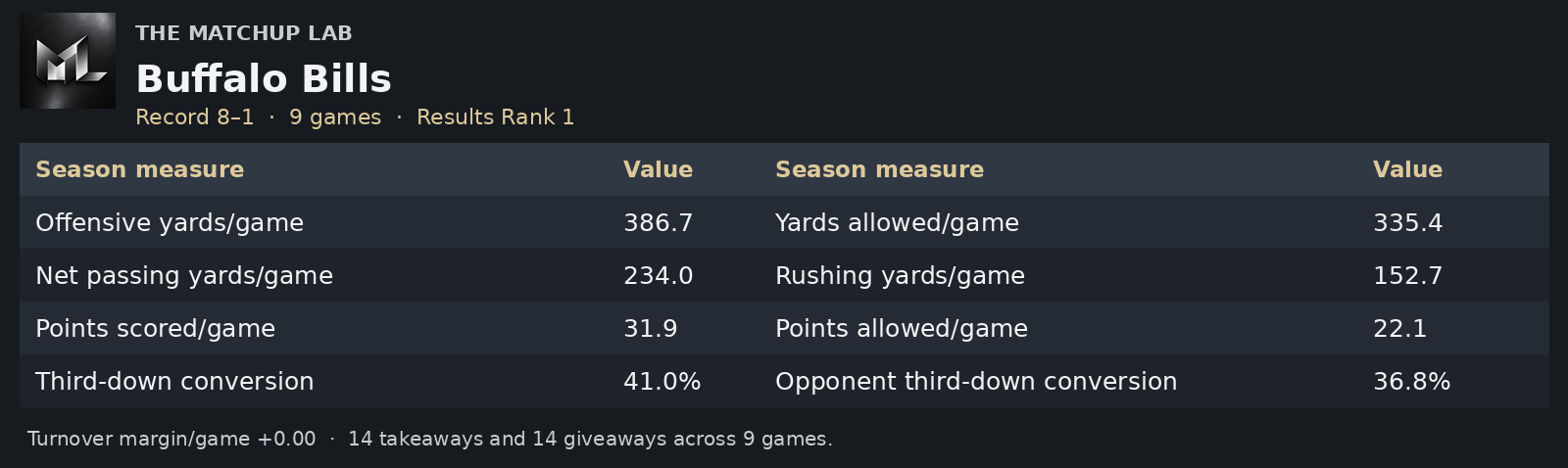
James Cook III supplied 157 of Buffalo’s 201 rushing yards against the Jets. His 74-yard score accounted for nearly half his personal total. Across nine games the Bills average 152.7 on the ground, so there is a rushing offense here even when the longest play disappears. At 8–1 the area worth revisiting is third down. Buffalo went two for ten Sunday against a season rate of 41 percent. Miami’s job gets considerably harder if it has to stop Cook twice and then still defend a full menu on third and short.