
THE MATCHUP LAB · NFL
Game Center
Scores, statistics and the story behind the game.
Checking for updates…
Complete NFL Week 10 recap and all 32 team assessments
The Giants had the longest touchdown of the game, a 66-yard connection from J.J. McCarthy to Isaiah Likely that put them in front in the fourth quarter. Washington answered with a 32-yard scoring pass to Stefon Diggs with 57 seconds left. The less conspicuous difference came between those long plays. The Commanders converted seven third downs to New York’s four and reached the end zone on their only trip inside the 20. New York had four such trips and came away with two touchdowns. That is how a team can gain 59 more yards than its opponent and still need its defense to make the final stop.
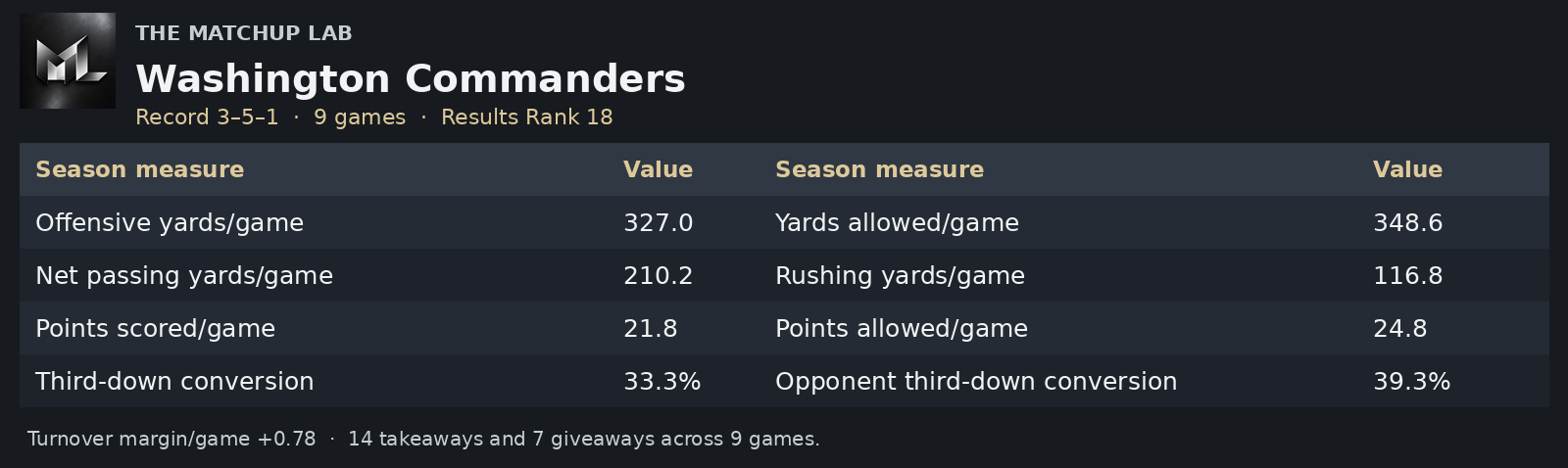
Daniels threw two interceptions and still found three touchdown passes, including the winner to Diggs. Washington went seven for 14 on third down after converting just a third of its chances over the season to date. Cincinnati is a difficult opponent to give a short field. The best evidence for Washington ahead of Monday is the series it kept alive, because an extended drive also keeps Burrow’s offense on the sideline.
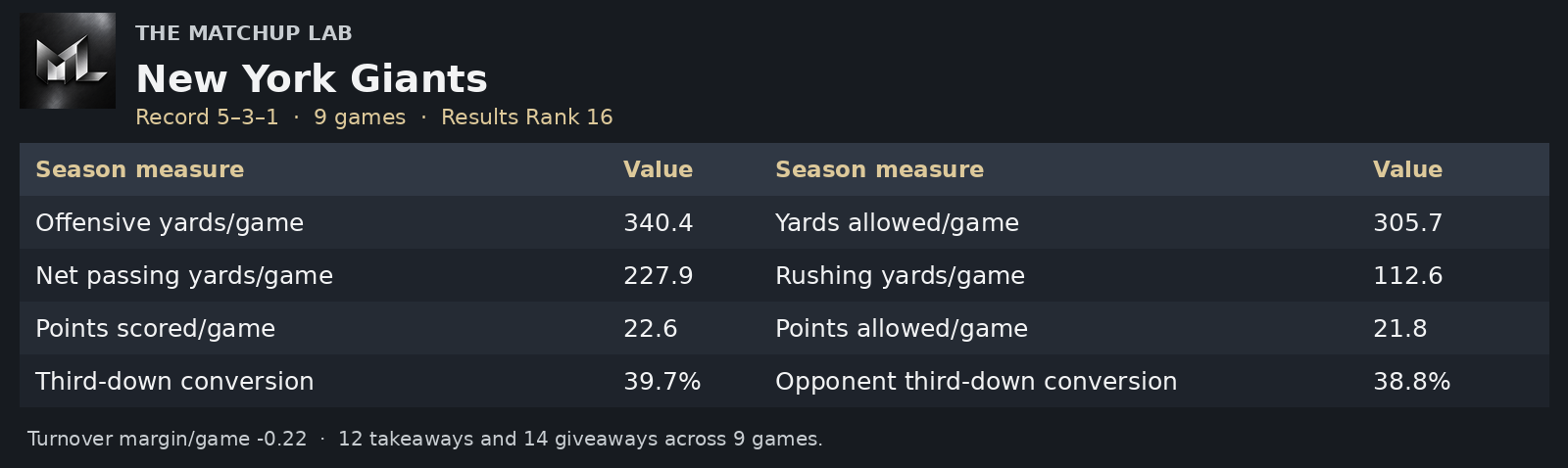
Likely’s nine catches for 127 yards included a 66-yard score that put New York ahead. The Giants did considerably more than hit one pass, finishing with 399 yards. Turning two of four red-zone visits into touchdowns left Washington within a single score. Jacksonville allows 16 points a game. Its defense can live with an occasional completion between the 20s if it forces another field-goal decision near the end of a drive.
Thu Nov 12 · 7:15 p.m. Central | Results Rank 26 and 12
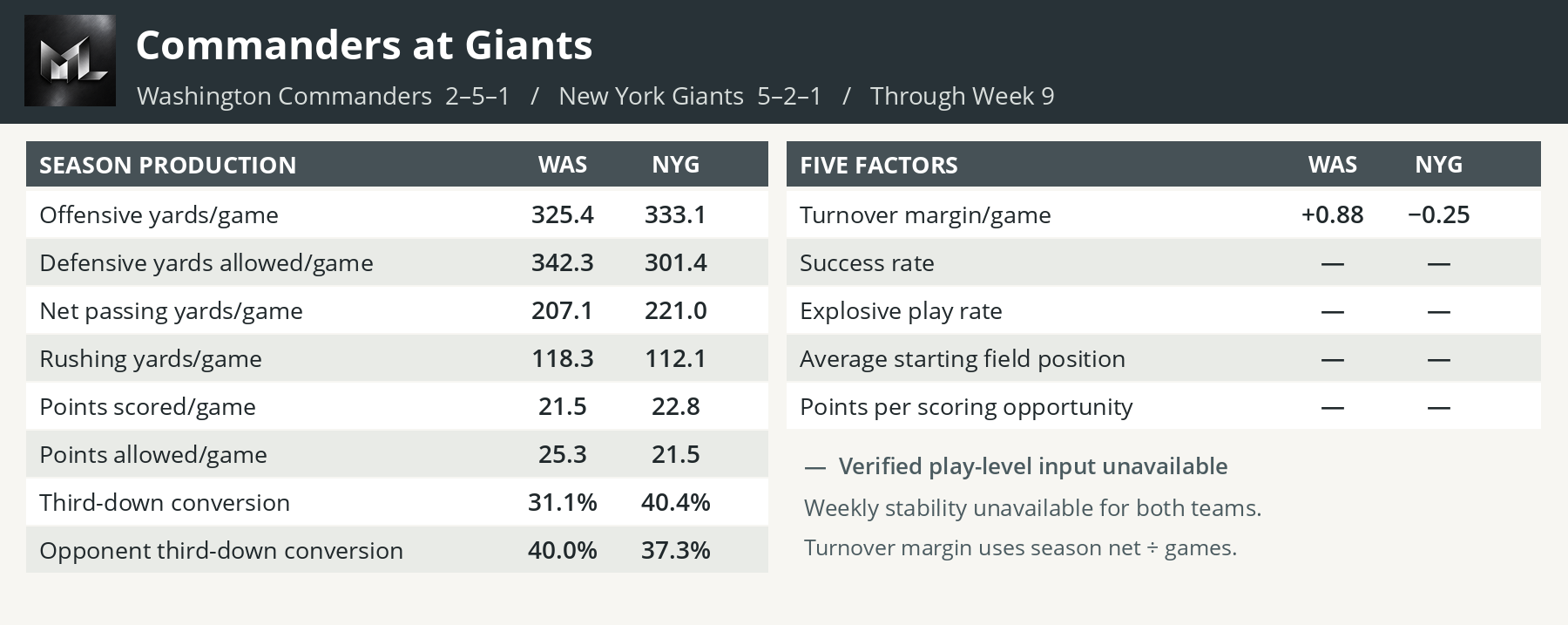
Washington won the turnover comparison across its first eight games by seven and came out of them with two victories. New York lost that same comparison by two and won five. That is what makes a short-week meeting between teams with very different records interesting. Another favorable bounce would give Washington one possession. Getting off the field three or four plays sooner could give it a better afternoon’s work over the course of the game.
The Giants bring the more convincing argument on third down. Their defense has allowed 37.3 percent, while Washington’s offense has converted just 31.1 percent. Washington does average 118.3 rushing yards, a little more than New York. The practical value of that ground game here comes on first and second down. Gaining four on each gives Washington more choices than a predictable dropback into coverage on third and long. A grind suits neither side automatically. The Giants average only 22.8 points, and their 19–11 win over Philadelphia shows how little separation a good defensive outing can buy them.
Washington scored 13 against the Rams in Week 9. It needs points from the possessions it earns as well as the ones its opponent gives away. On the other side, New York can use its 40.4 percent offensive third-down rate to make Washington defend another series before its offense gets a second chance. The short-week injury report listed both Jayden Daniels and J.J. McCarthy at full participation on Wednesday, with the Giants’ walkthrough entry an estimate. That leaves the more immediate question in the trenches. Can Washington make the Giants earn a stop on third and short, or will New York get to defend the sticks all evening?
The Tuesday price put New York ahead by 2.5, inside the value of a field goal. For a visitor that has already played to one tie, cashing a short field into seven instead of three could matter more than winning the yardage total.
Complete NFL Week 9 recap and all 32 team assessments
Week 9 loss 13–20 against Los Angeles Rams
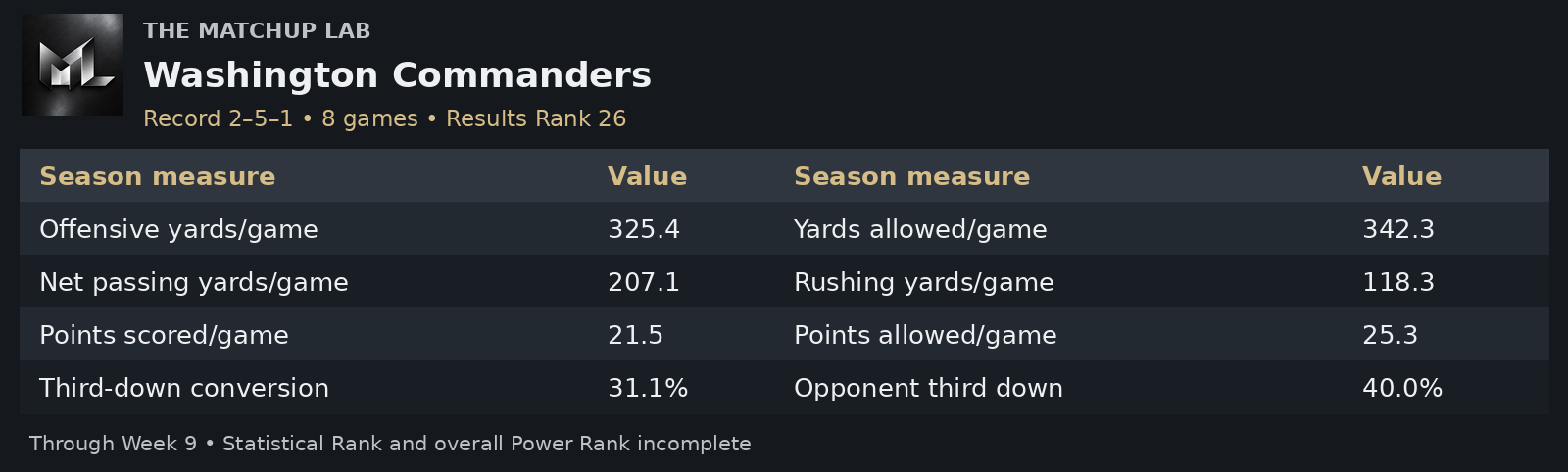
Washington's 20–13 loss to the Rams interrupted the improvement shown in its previous 27–10 win over Philadelphia. The Commanders are 2–5–1, with an offense averaging 325.4 yards and 21.5 points per game. Their 118.3 rushing yards provide useful production, but a 31.1 percent third-down conversion rate makes it difficult to carry enough possessions forward. The defense allows 25.3 points per game, so Washington rarely has the luxury of treating a limited offensive total as an acceptable target.
The quick return against the Giants puts that possession problem under immediate examination. New York allows 301.4 yards per game and a 37.3 percent opponent third-down conversion rate, while its own offense converts 40.4 percent. Washington needs to reduce the number of possessions that end before a scoring chance develops and force the Giants to face the same difficulty. The earlier win over Philadelphia showed a better result was possible. Reproducing that kind of scoreboard requires more sustained work than the Rams game provided.
Week 9 win 19–11 against Philadelphia Eagles
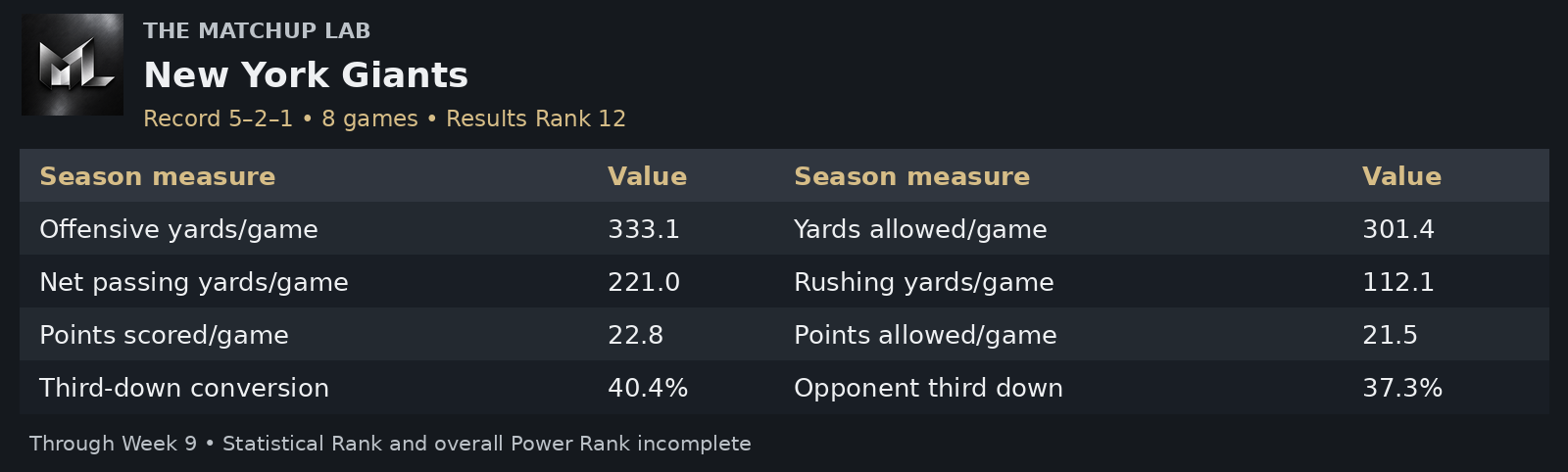
The Giants moved to 5–2–1 by beating Philadelphia 19–11, adding another win to a season built on reasonably controlled games. They allow 301.4 yards per game and opponents convert 37.3 percent of third downs. The offense is less overwhelming than the record might initially suggest, averaging 333.1 yards and 22.8 points against 21.5 points allowed. That modest scoring separation leaves a continued premium on completing possessions and avoiding unnecessary opportunities for the other side. Sunday's eight-point margin was useful, but it did not change that broader requirement.
Washington arrives for Thursday's next assignment with a 31.1 percent offensive third-down conversion rate. The Giants have an opportunity to turn that weakness into short possessions for the Commanders, then make their own 40.4 percent conversion rate count. Washington's tie remains part of its 2–5–1 record, just as New York's does. The Giants can strengthen their position by winning the routine exchanges that their season numbers suggest they are equipped to manage.