
THE MATCHUP LAB · College football · FBS
Centro del partido
Marcadores, estadísticas y la historia del partido.
Buscando actualizaciones…
Scores and box scores are drawn from ESPN, with outside reporting from official university postgame reports and the Associated Press. The Matchup Lab provides the ranking calculations and original analysis.
Michigan State Spartans 7–45 Oregon Ducks · 2026-11-21T01:00Z
Season assessment through Week 12 from the November 23, 2026 edition.
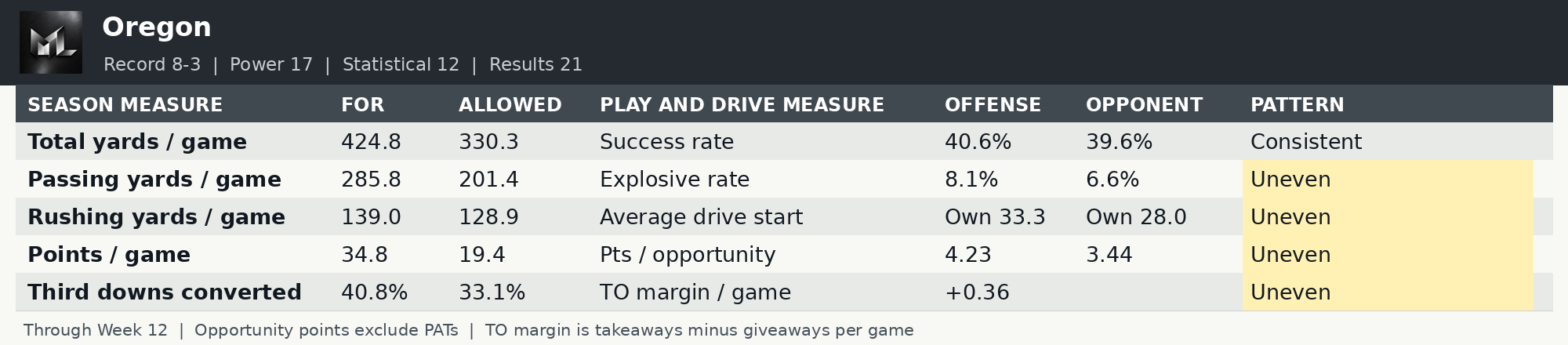
Oregon’s scoring output is stronger than its narrow advantage in routine efficiency might suggest. The 8–3 Ducks average 34.8 points, but their 40.6 percent success rate barely exceeds the 39.6 percent allowed. Their more useful separation comes from explosive plays and a passing game supplying 285.8 yards per outing. Oregon also starts possessions about 5.2 yards farther forward on average and earns more points once a scoring opportunity arrives. Together, those advantages make individual gains and favorable locations especially valuable. They do not eliminate the need for productive plays when an opponent prevents the offense from gaining ground quickly.
The 45–7 win over Michigan State supplied a useful counterweight to any dependence on occasional big gains. Oregon converted ten of fifteen third downs, gained 422 yards and committed no turnover, while holding the Spartans to 200 yards. It has now gone three games without a giveaway, taking the ball away five times across those contests. The defense also held Michigan to seven points the previous week. Those results matter, but the season’s narrow success-rate margin and uneven explosive and finishing returns remain relevant. Sustaining the latest possession efficiency would make Oregon less dependent on the timing of its larger plays.