
 Short
What in the Hog?!
Van Dijk’s header went to the wrong address | What in the Hog?!
Published Oct 22, 2026
THE MATCHUP LAB · UEFA Champions League
Scores, statistics and the story behind the game.
Checking for updates…
THE MATCHUP LAB COVERAGE
Season evidence cutoff October 30 2026 at 18:10 UTC. This assessment is separate from the event’s original date.
Complete Champions League weekly edition
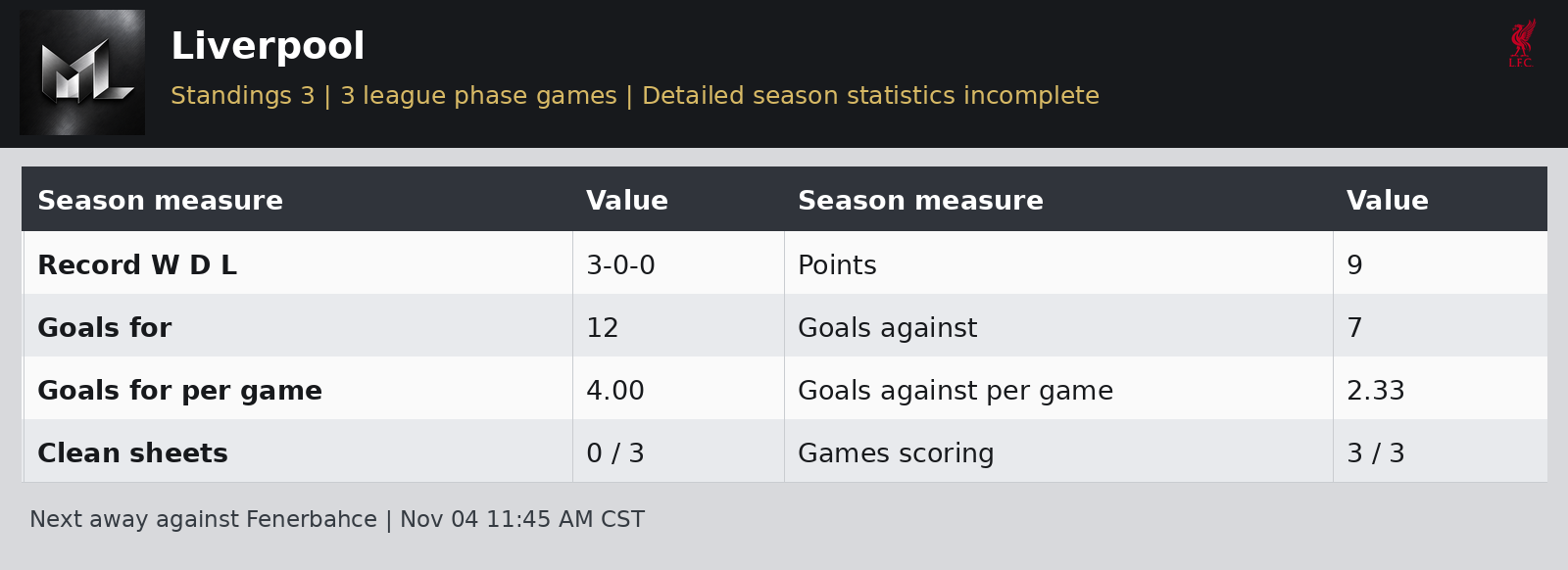
Liverpool have won every game while conceding seven goals. That is a powerful scoring start and a less comfortable foundation than the nine points suggest. A 6–3 at LASK and 4–3 against Villarreal account for ten of the twelve goals scored, but also six of the seven allowed. The latest win therefore reinforces the same question rather than resolving it. Can Liverpool close a game without having to score again? Fenerbahçe away comes next. Their hosts have conceded nine, including six against Villa, but have drawn both their home matches. Liverpool should expect an opponent with reasons to protect a point and wait for mistakes. Maintaining pressure matters, but so does keeping enough players in position when that pressure breaks. The record is flawless; the defending has not been.
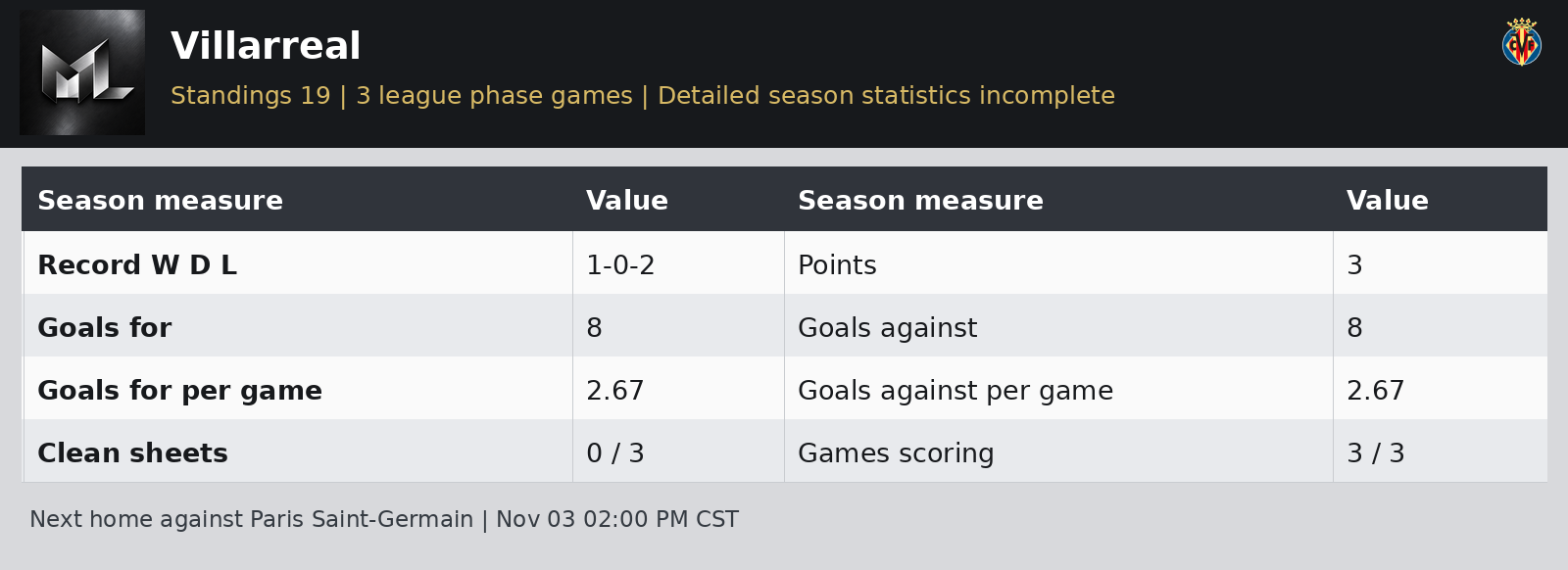
Villarreal have scored eight and conceded eight, yet have only three points. The latest 4–3 defeat at Liverpool and opening 3–2 loss at Dortmund explain the mismatch between attacking output and results. They were competitive on the scoreboard, but another goal at the other end kept deciding the match. Paris next arrive with fourteen goals and a perfect record. Villarreal cannot reasonably treat the ability to score three as sufficient protection against this opponent. They need to make their own attacking periods less expensive when possession changes, and avoid asking for a fourth goal simply to remain level. The 3–1 win over Napoli remains the better balance in the record. Recreating that restraint against a much more productive attack is the central challenge.