Ottawa Senators at Toronto Maple Leafs
Oct 03 6:00 PM CT · Final 3–2
Ottawa Senators season assessment
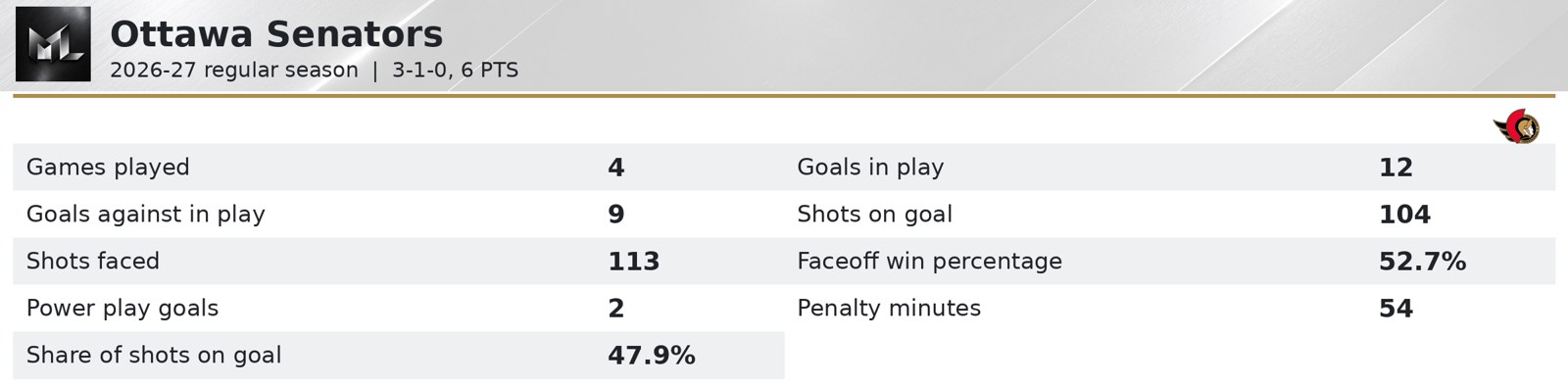
The early +3-goal balance in ordinary play puts Ottawa Senators’s 3–1–0 start in context. Its share of the combined shots on goal is 47.9%. The opponent has received the larger share of recorded shots. A good finishing night can cover that imbalance for a while, but it asks a great deal of both the scorers and the goaltender. Cleaner exits and a supported next attack would change the working conditions.
The attack has converted 11.5% of its recorded shots, with 2 power-play goals. The latter is a count, not a conversion percentage because verified opportunity totals are missing. The practical task is to keep creating a usable next possession and to avoid a penalty that gives the opponent an easier route to a scoring chance. The latest completed game in this edition’s window was Philadelphia Flyers 1, Ottawa Senators 2. That result should be tested against the full opening sample rather than used to erase it.
Toronto Maple Leafs season assessment
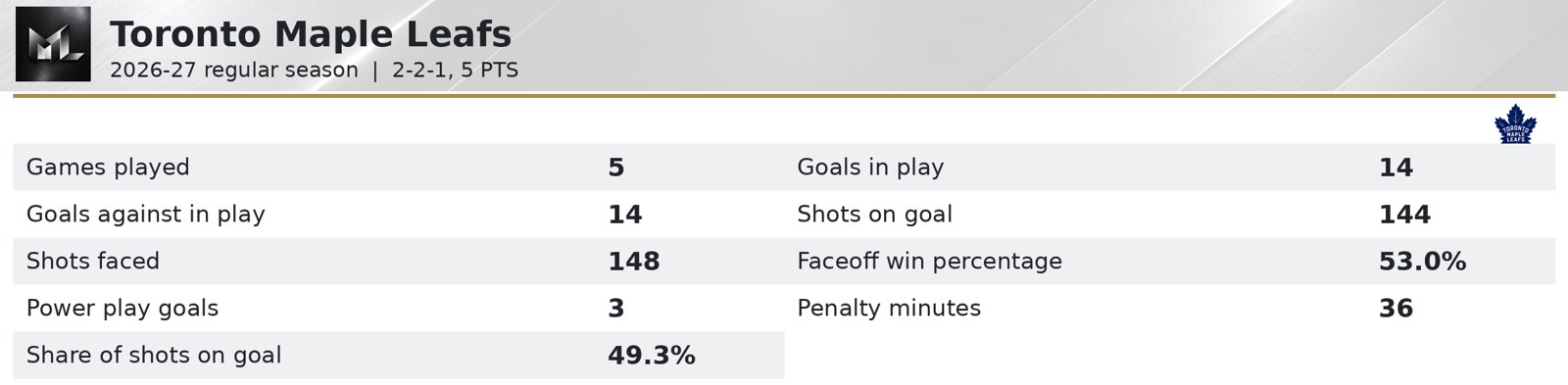
A short sample makes Toronto Maple Leafs’s 5 games a starting point for questions, not a settled identity. The record is 2–2–1, with 144 shots taken and 148 faced. The shot volume is close enough that the quality of the next chance matters more than a claim of territorial dominance. Ending a defensive sequence cleanly gives the attack room to begin before it has to solve another recovery.
The attack has converted 9.7% of its recorded shots, with 3 power-play goals. The latter is a count, not a conversion percentage because verified opportunity totals are missing. The practical task is to keep creating a usable next possession and to avoid a penalty that gives the opponent an easier route to a scoring chance. The latest completed game in this edition’s window was Toronto Maple Leafs 3, Vegas Golden Knights 4. That result should be tested against the full opening sample rather than used to erase it.