
THE MATCHUP LAB · NFL
Game Center
Scores, statistics and the story behind the game.
Checking for updates…
Sun Nov 22 · Noon Central | Power 20 / 16 | Statistical 12 / 14
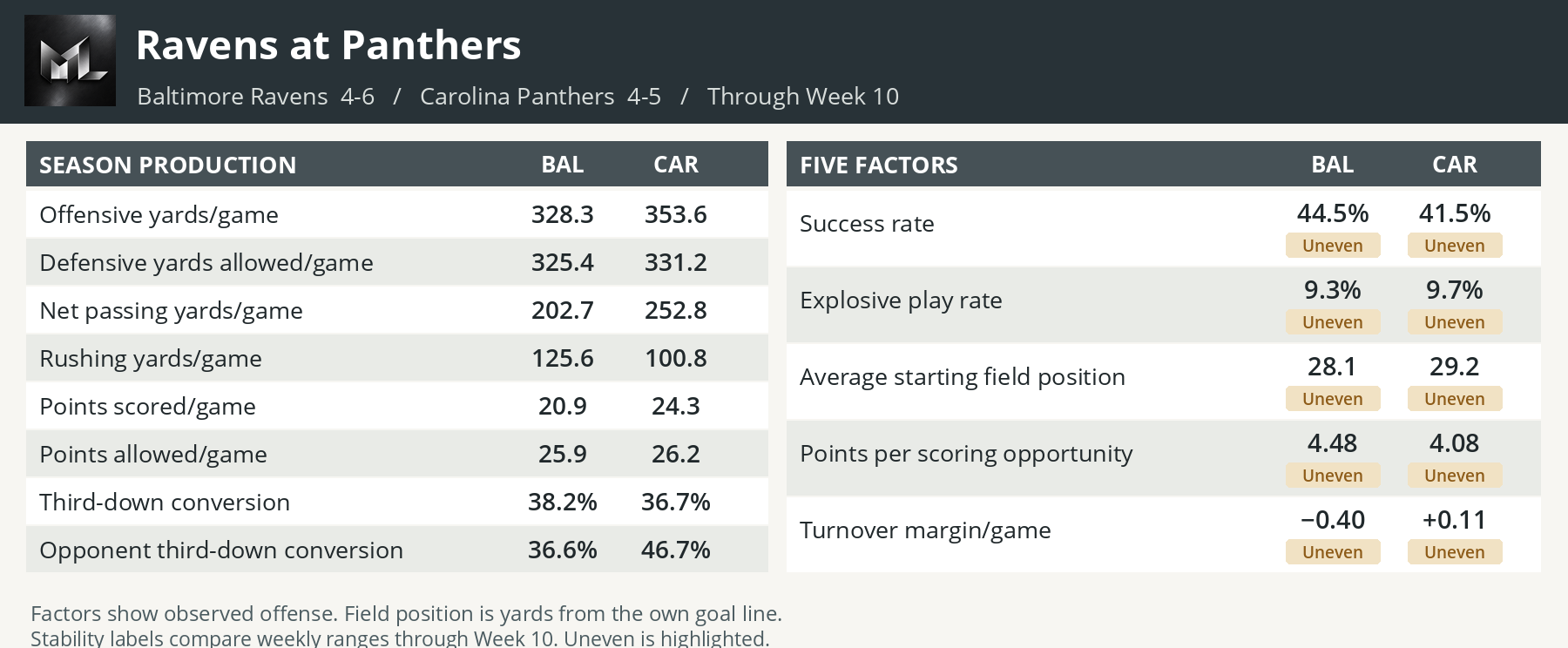
Baltimore and Carolina are close in Statistical Rank, separated by two places, but they reach that neighborhood in different ways. The Ravens create the stronger down-to-down offensive platform. Their 44.5 percent success rate exceeds Carolina’s 41.5 percent, and the advantage is larger on early downs. Carolina has built more of its resistance around denying explosive plays. Only 7.1 percent of qualifying snaps against the Panthers have become a run of at least 10 yards or a pass of at least 20. That is the matchup that can keep a narrow favorite from being pulled into a possession race.
The Panthers’ problem is what happens when opponents need only a few yards. Their defense has allowed a 46.7 percent third-down conversion rate. Baltimore’s offense has converted 38.2 percent, so this is a chance for the Ravens to turn solid early-down movement into longer drives. They also average 4.48 points per scoring opportunity against Carolina’s 4.20 allowed. That combination gives Baltimore a credible way to outperform its 20.9 points per game without requiring a sudden burst of long touchdowns. Sustaining possessions would also keep a defense allowing 25.9 points from returning to the field too quickly.
Carolina comes off a 20–17 win over New Orleans and can answer through field position and ball security. Its eligible drives begin at its own 29.2, about a yard beyond Baltimore’s average start. The Panthers have a small positive turnover margin, while the Ravens have lost the season comparison by four. Those differences matter in a game priced Carolina by 2.5. They do not eliminate the need to finish. Carolina’s 4.08 points per scoring opportunity leave room for empty possessions to undo an otherwise productive afternoon.
Baltimore’s 23–20 loss to the Chargers extended the gap between portions of its statistical profile and its results. This week asks whether the Ravens can join those portions together. Win early downs, convert the manageable third down and keep the ball through the end of the possession. Carolina’s path is to absorb the short gains without allowing the drive to become seven points. The 43.5 total leaves room for an ordinary field-position game in which one touchdown after a long possession carries unusual weight.
Complete NFL Week 10 recap and all 32 team assessments
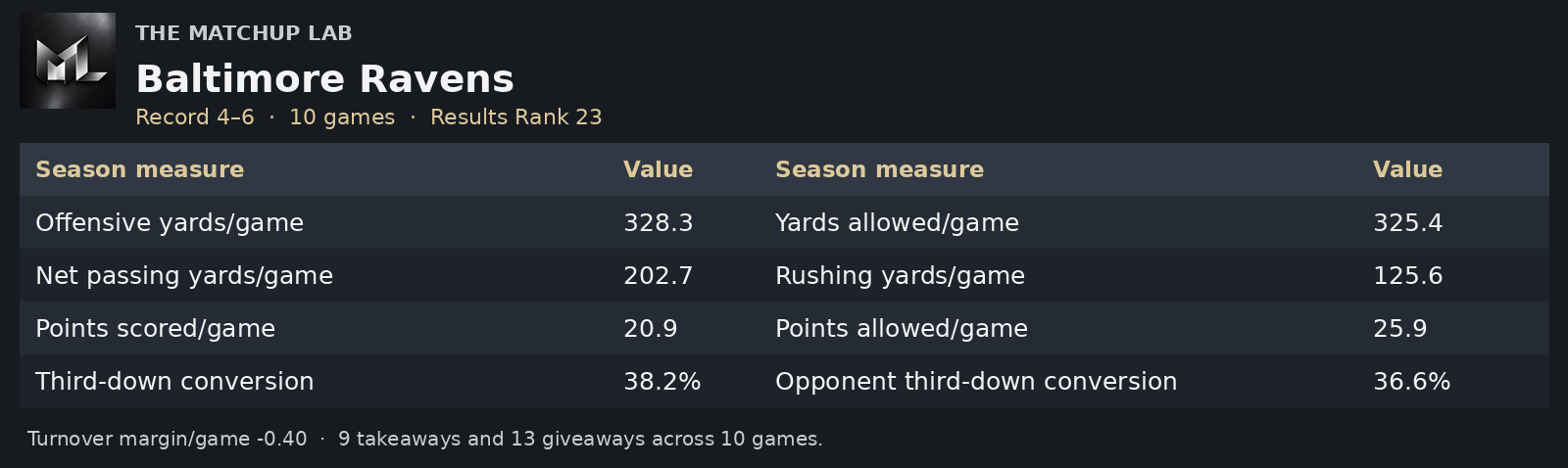
Henry’s two touchdown runs covered three yards combined. Baltimore’s other carries did little to change where the next possession began, and 340 gross passing yards from Brissett could not quite cover the loss. The Ravens average 125.6 rushing yards, making 16 against the Chargers a substantial departure. Carolina just won without a giveaway. The Ravens need their ground game back so the next close finish does not turn on a single vulnerable catch in traffic.
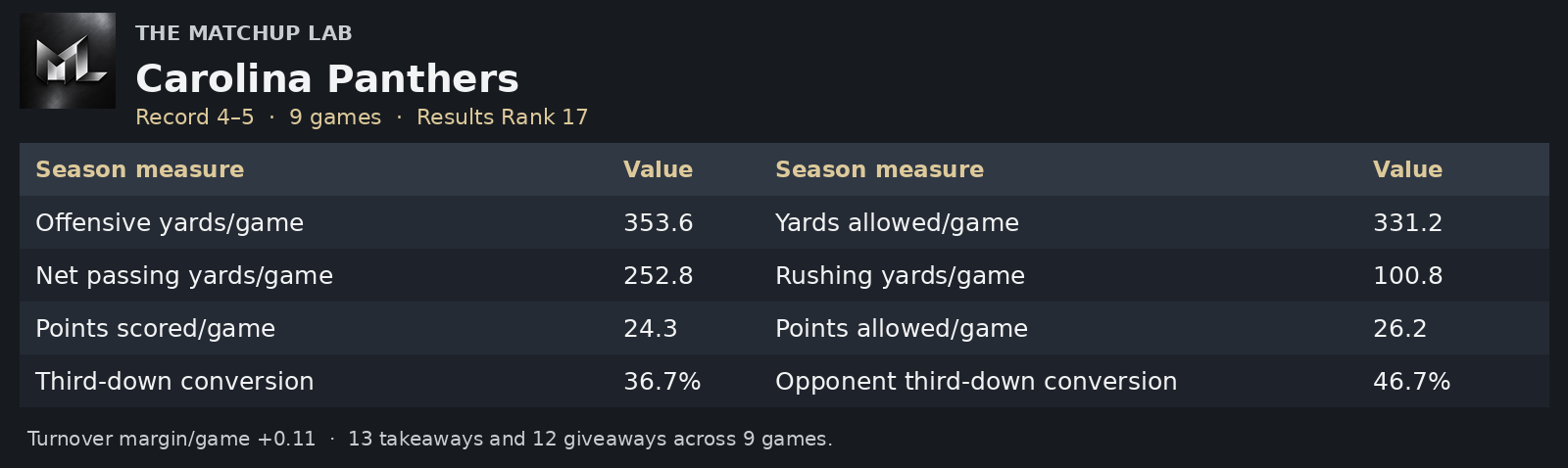
Hubbard’s 27 carries got the short-yardage attention, but his five catches for 80 yards made him Bryce Young’s most productive receiver as well. The Panthers average 252.8 net passing yards and 100.8 rushing. Those categories overlap in practice when the back is doing both jobs. Against Baltimore, watch whether Carolina can get Hubbard the ball in space before the defense can bring the extra tackler that stops an inside run.