
THE MATCHUP LAB · NFL
Game Center
Scores, statistics and the story behind the game.
Checking for updates…
Read the complete NFL Week 6 preview
Sun Oct 18 · Noon Central
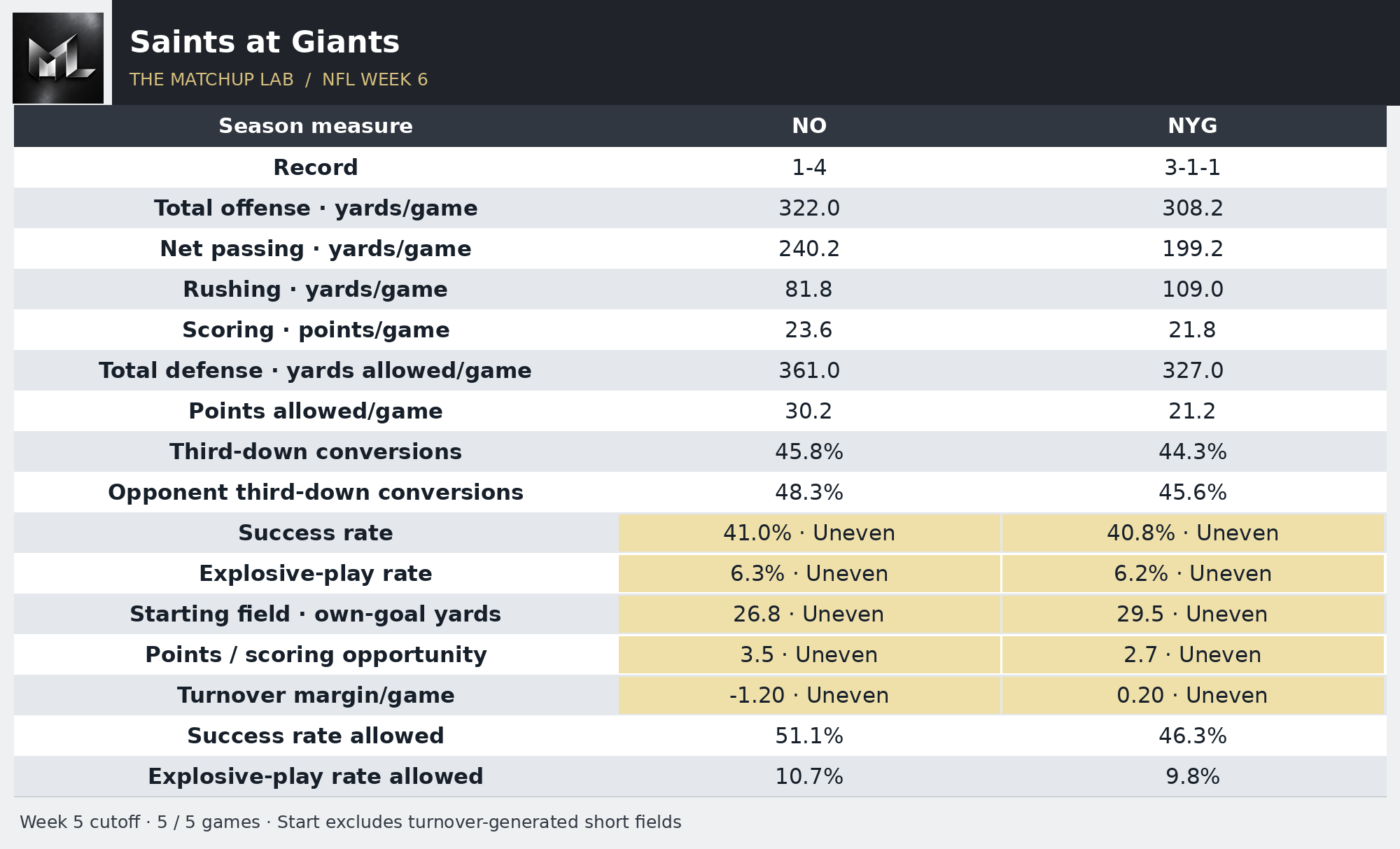
The Giants' 3–1–1 record and the Saints' 1–4 record tell only part of this matchup. New Orleans scores 23.6 points per game, more than New York's 21.8. The problem is what happens when the Saints stop possessing the ball. Their defense allows 30.2 points per game and successful gains on 51.1 percent of qualifying snaps. That creates an opportunity for a Giants offense whose own 40.8 percent success rate and 6.2 percent explosive rate have not provided a convincing platform for easy afternoons.
New York needs to use that opening without mistaking the standings for evidence that its attack is already complete. The Giants average 2.7 points per scoring opportunity. Against a defense that has allowed long series of useful gains, settling for a low return would keep the Saints in a game that New York should be trying to control. A short completion that sets up another manageable down is useful only if the possession eventually produces something better than another abandoned scoring chance.
New Orleans must solve two different problems. Its offense has given the team a chance to produce points, but its minus 1.20 turnover margin per game has repeatedly reduced possession value. Its defense has also been vulnerable even before a turnover changes the starting field. Blaming all of the scoring conceded on mistakes elsewhere would ignore how often opponents have moved successfully. The Saints need an early-down stop that is followed by another stop, not a single successful tackle erased by the next completion.
The decisive matchup is New York's ability to build and finish a sustained drive against New Orleans' vulnerable down-to-down defense. The Giants must be more assertive near scoring range. The Saints must preserve the ball and force New York to earn its production without convenient mistakes. This is an opportunity for the Giants to improve the performance behind their record, not a reason to assume the record will do the work.
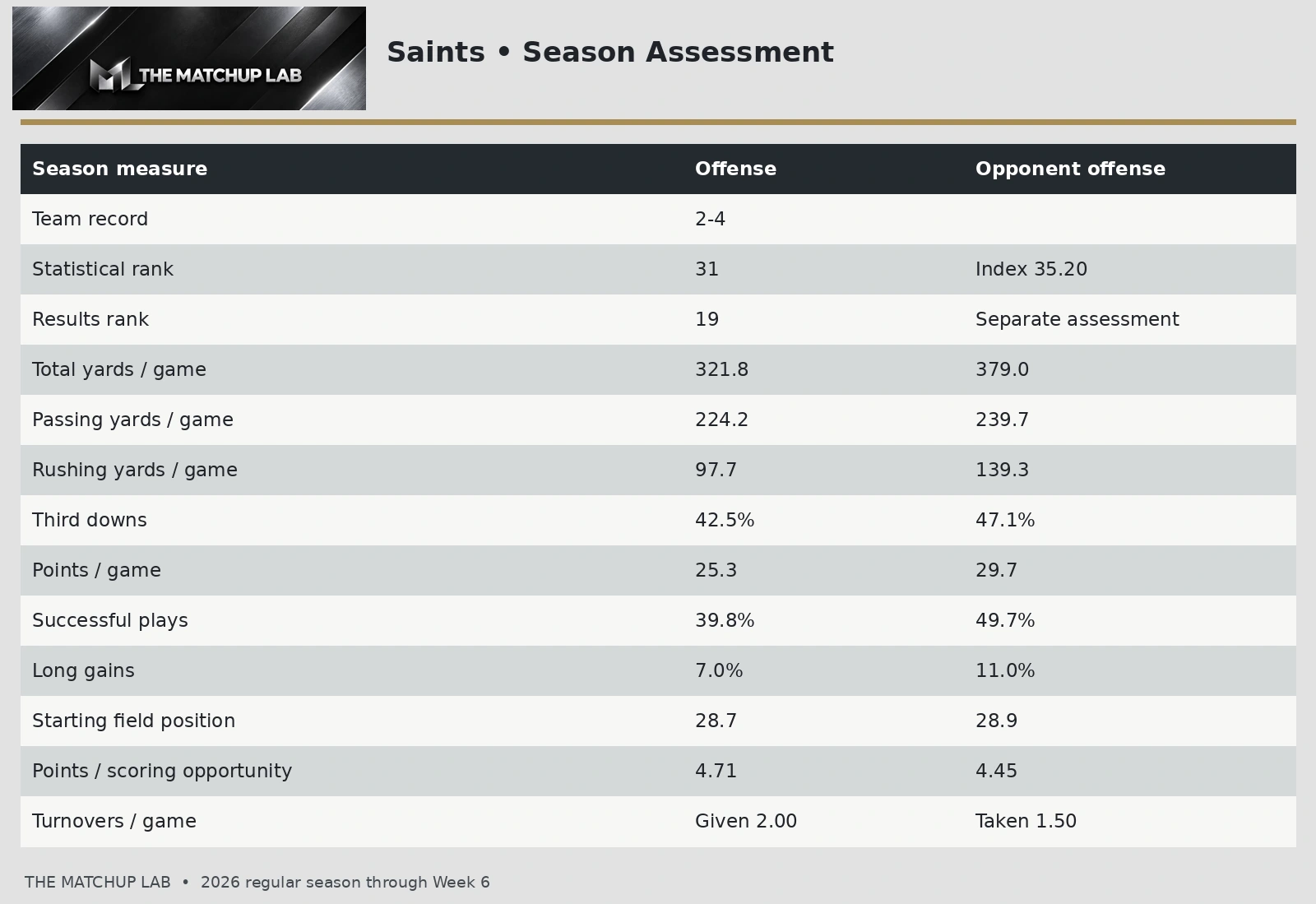
New Orleans' 34–27 win over the Giants gave the offense a productive latest result and moved the record to 2–4. Allowing 27 points also fit the broader defensive concern. Opponents have made useful gains on nearly half their ordinary plays, with long gains occurring more frequently than the Saints have produced themselves. That makes the scoring requirement difficult to escape. New Orleans has extracted a healthier return from its own threatening drives, helping keep games competitive without establishing reliable control. Nineteenth in Results Rank rewards two wins and their context. Thirty-first statistically reflects how much work remains between the scores. Pittsburgh brings another team that has survived on selected finishing moments. Earlier defensive stops would make the next game less dependent on them.
Next game is PIT at NO, Sunday, October 25th, 8:30 AM Central.
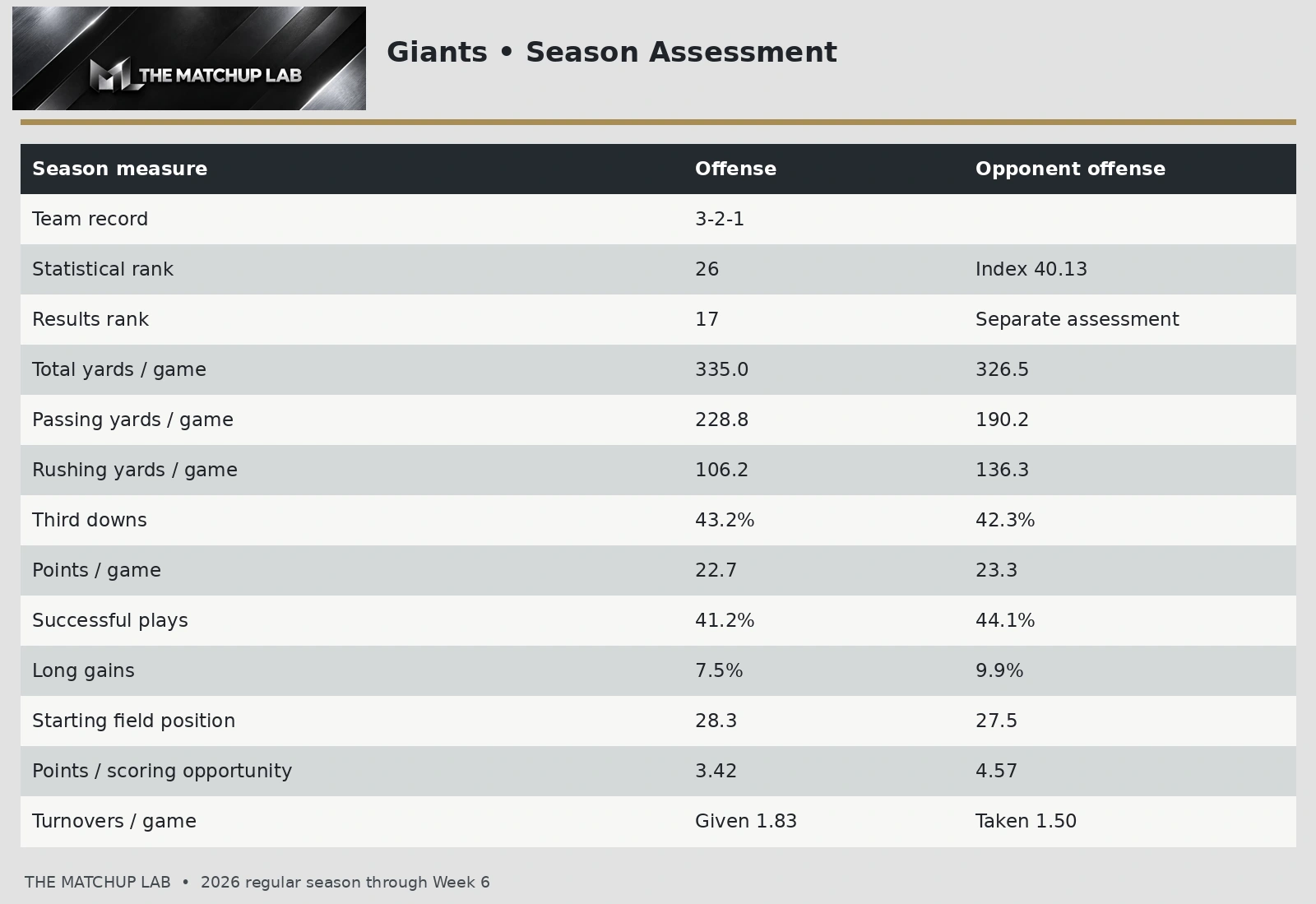
The Giants' 3–2–1 record is better than their negative scoring margin, and the 34–27 loss to New Orleans showed how quickly the margin within a game can change. New York made the final score competitive without erasing the earlier defensive damage. Across the season, the Giants have produced ordinary gains and long plays less frequently than their opponents, and their return from threatening drives has also been weaker. The offense therefore has too few reliable ways to compensate when the defense concedes territory. Seventeenth in Results Rank recognizes the outcomes already achieved. Twenty-sixth statistically keeps the performance questions open. Houston is the next test of whether New York can start productively and force earlier stops, before another large recovery becomes necessary.
Next game is NYG at HOU, Sunday, October 25th, 12:00 PM Central.