
THE MATCHUP LAB · College football · FBS
Game Center
Scores, statistics and the story behind the game.
Checking for updates…
26–34 final | 2026 regular season | Evidence cutoff 2026-11-01T11:35:11Z
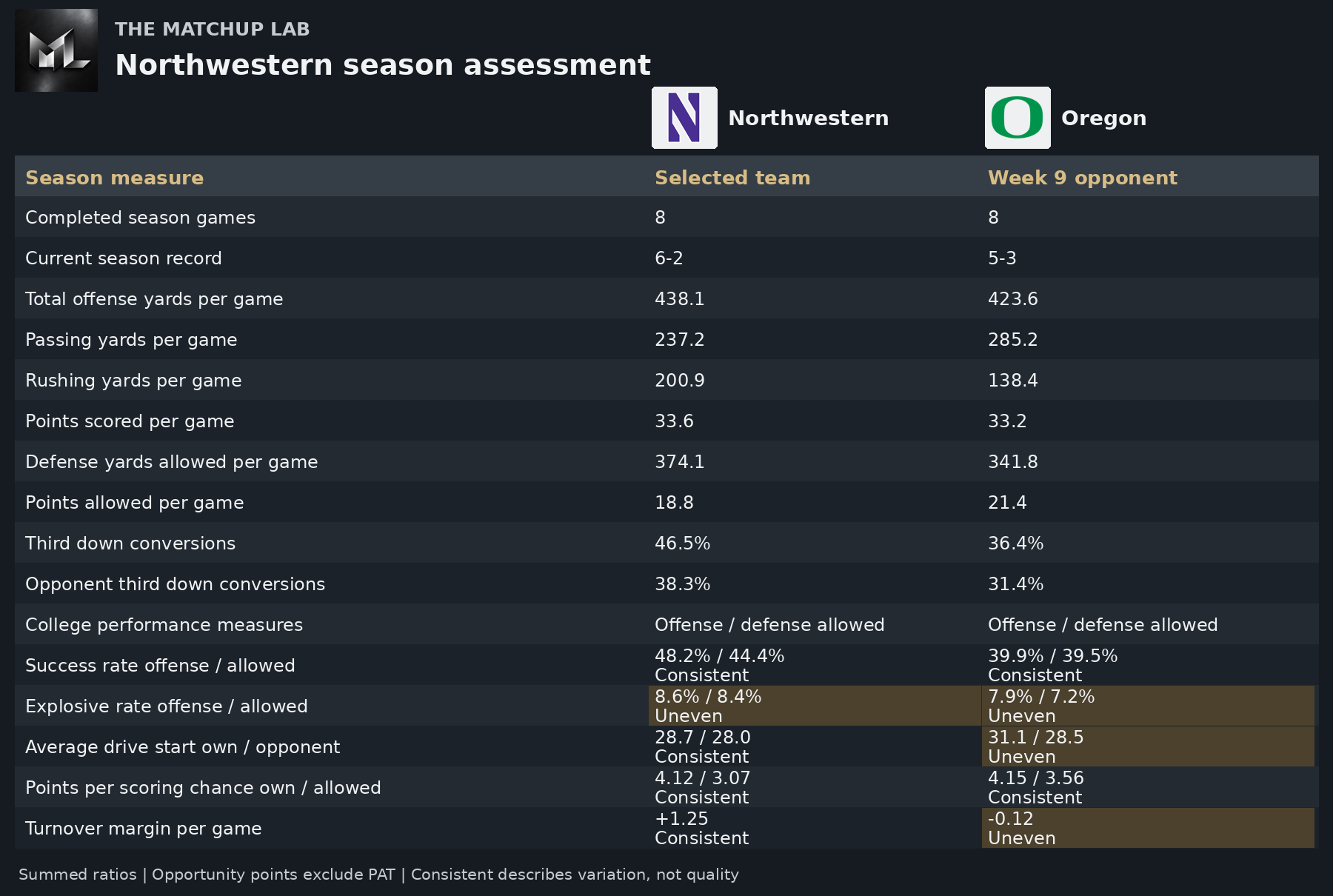
Northwestern's 34–26 loss to Oregon was a close game in which moving the ball did not become enough points. The Wildcats gained 456 yards to Oregon's 441, protected possession without a giveaway and collected one takeaway. Seven conversions from 17 third downs kept them involved. They still could not match Oregon's scoreboard return.
That outcome fits a season with a productive offense and less secure defensive control. Northwestern average 438.1 yards, with more than 200 rushing yards and a substantial passing contribution. Their third-down rate is healthy. They can produce sustained movement without depending on every possession beginning in favorable territory.
The defensive allowance of 374.1 yards is the more difficult part of the assessment. Their offensive and defensive explosive-play rates are almost level, so long gains have not consistently separated them from opponents. Oregon's 336 passing yards exposed the practical danger. Northwestern did enough to keep the ball moving, but not enough to make the other offense work through a less rewarding game.
The season turnover margin of plus 1.25 per game has helped, while the average starting-position comparison is close. That combination should discourage a simple explanation in which all favorable possession outcomes come from defensive stops. Iowa are next in the verified schedule. Their low scoring allowance and recent shutout ask Northwestern to finish movement efficiently. The Wildcats also need to reduce the opponent's long gains so another yardage advantage does not end as another narrow defeat.
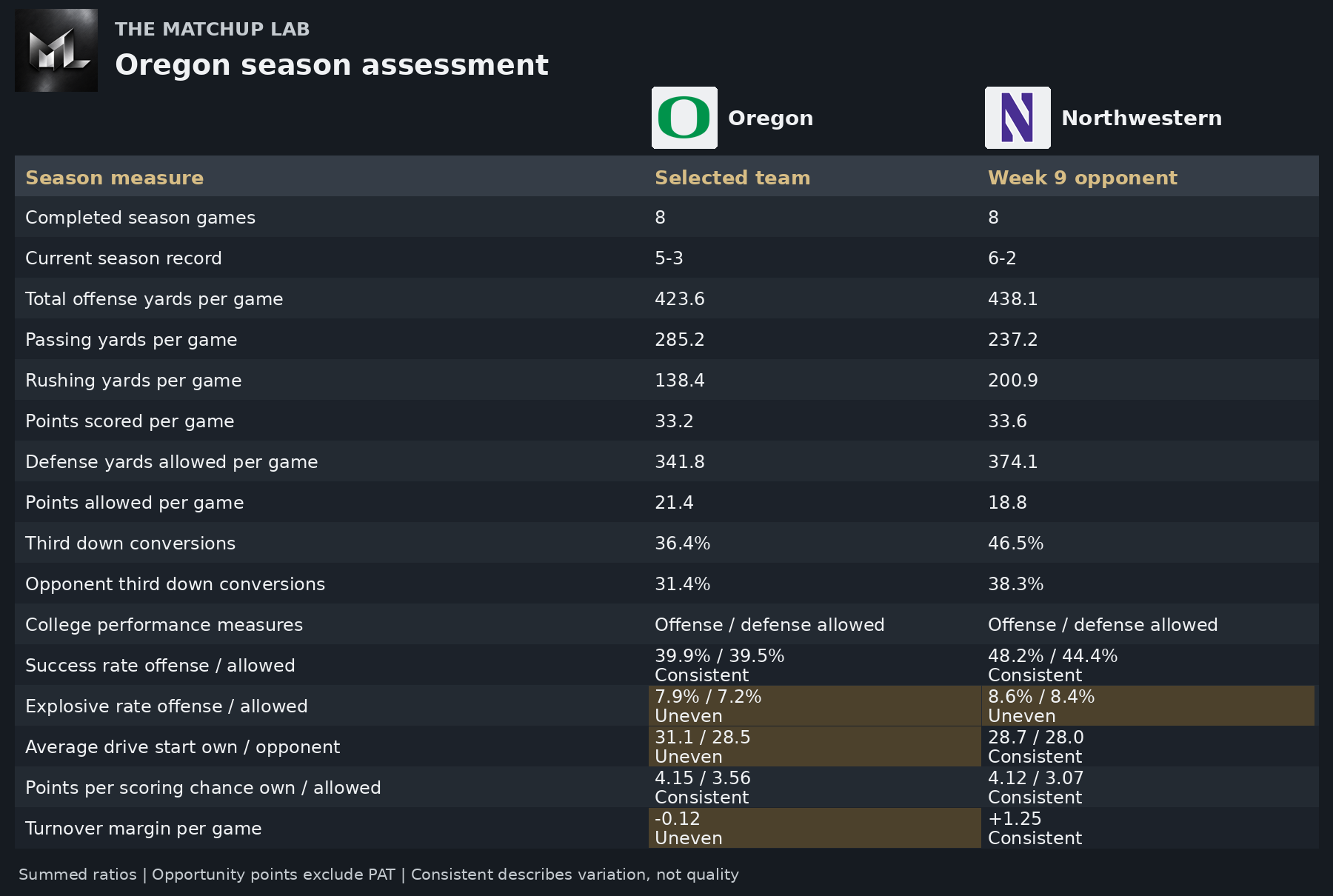
Oregon's 34–26 win over Northwestern was a passing-led answer to a game in which they did not own the turnover count or the yardage total. The Ducks threw for 336 of their 441 yards and rushed for 105. They lost possession once without taking it away, while Northwestern gained 456. Oregon nevertheless received enough scoring value from their drives to win.
The season passing average of 285.3 yards supports that identity. Oregon average 423.6 total yards and 33.3 points, but their rushing contribution is much smaller than that of several teams in this field. Sustained passing progress therefore has to do more of the work when the ground game cannot shorten the next down.
There are limits to the enthusiasm. Oregon's successful-play rate is only slightly above the rate allowed, and their third-down conversion rate is 36.4 percent. Their offensive explosive-play advantage helps, but long gains and successful finishing can leave the result vulnerable when either becomes less available. Northwestern's ability to move the ball was a reminder that this defense still has possessions to shorten.
Ohio State are next after losing despite a large yardage advantage of their own. Oregon need to make the Buckeyes work for points while protecting enough offensive possessions to reproduce their latest scoreboard efficiency. The Northwestern game is counted once on the shared results board, with each selected team receiving its own season assessment. Oregon join this week's calculated statistical membership in 22nd place, while their three losses put them 25th overall.
2026-10-31T19:30:00.000Z | 2026 regular season | Evidence cutoff 2026-10-30T10:20:00Z
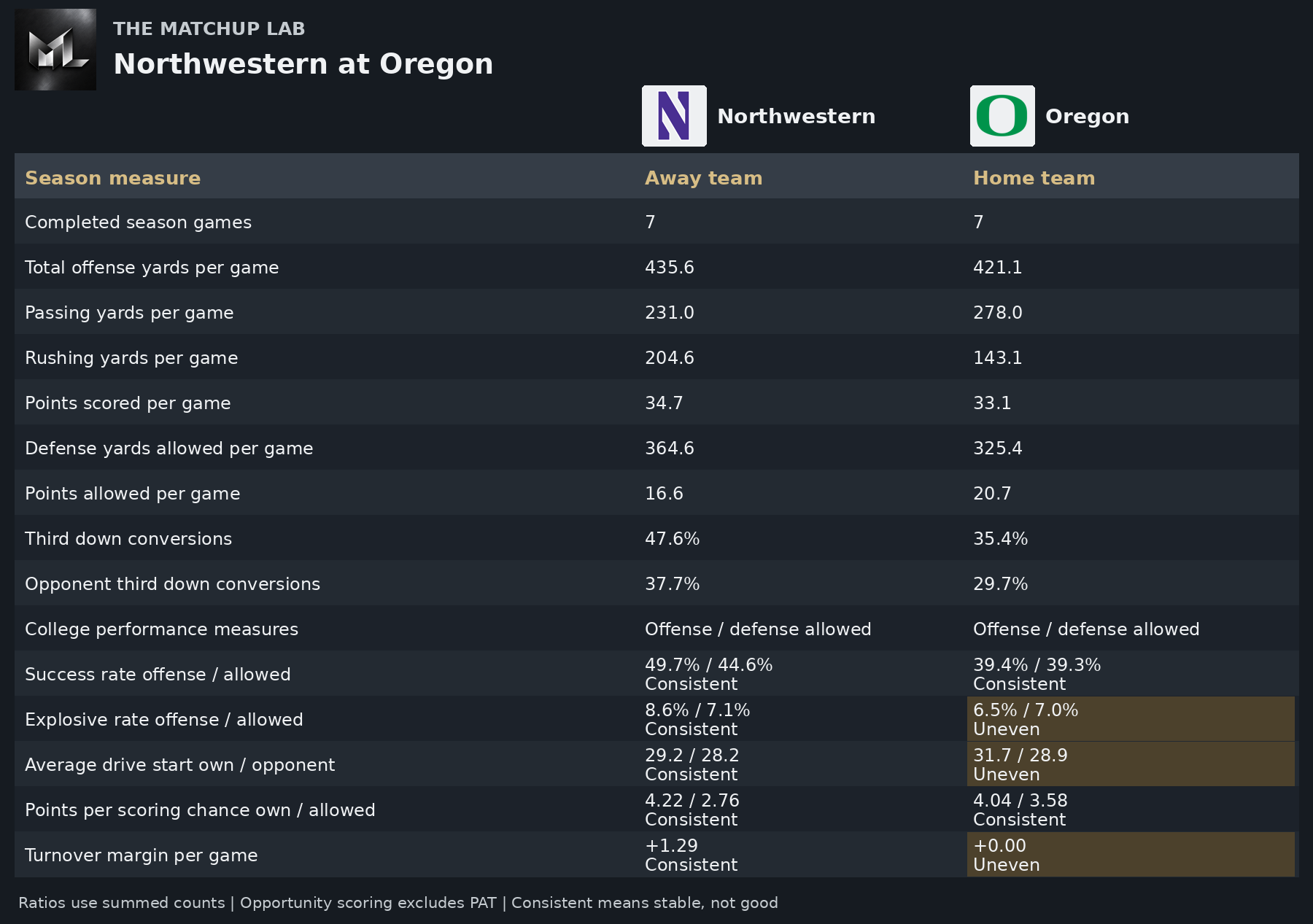
Northwestern's 6-1 season has been built through more than a favorable final score. The Wildcats have run for more than 200 yards per game, kept drives alive and produced a strong difference between what they earn and allow once possessions reach scoring range. Their 42-14 win over Rutgers supplied a clear recent example, with 502 yards, 283 on the ground and nine successful third downs in thirteen attempts. Oregon offer a more demanding defensive test. Northwestern need the same useful progression through a drive without assuming that Rutgers's resistance will travel west with them.
The Ducks' latest loss showed why total yardage alone cannot settle the assessment. Oregon gained 426 yards against Illinois and allowed 314, then lost 21-10. Four successful third downs in fifteen attempts left too many series unfinished. Across the season, Oregon's offense has been much less separated from opposing defenses on ordinary plays than its passing total might suggest. Northwestern should make those interruptions matter. Allowing one damaging gain after several useful stops would let Oregon escape precisely the longer sequence in which the Ducks have been less dependable.
Northwestern also need to scrutinize the help they have received from turnovers. Their season margin is strongly positive, and three takeaways helped last week's decisive result. That does not make the rushing and finishing advantages imaginary. It does mean the Wildcats should demonstrate that they can keep winning possessions when an opponent protects the ball. Oregon have an even season turnover margin and can make the visitors prove that longer route. The Ducks need to turn their own yardage into points rather than relying on another statistical argument about how much offense was available.
The decisive matchup is Northwestern's running balance and possession extension against Oregon's ability to force an empty series without immediately conceding a long gain. Northwestern need to protect the ball and make their scoring chances count. Oregon need better early-down results to reduce the number of long conversions their offense must attempt, then a more useful return when they reach dangerous territory. The Wildcats' record gives them the higher results position within our selected population. A road performance that works without another large takeaway advantage would provide a stronger explanation of why it should continue.